
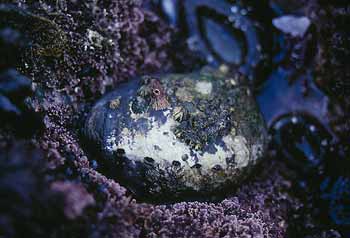
Flat Abalone
Haliotis walallensis
Photo: Photo: Wikimedia Commons, CC BY-SA
Overview
Haliotis walallensis, commonly known as the Walalla abalone, is a marine gastropod mollusk endemic to the coastal waters of the Pacific Northwest. This species belongs to the family Haliotidae, characterized by its distinctive ear-shaped shell with a series of respiratory holes along the outer edge. The Walalla abalone inhabits rocky intertidal and subtidal zones, typically found attached to hard substrates in areas with strong water circulation and abundant kelp forests.
These mollusks are herbivorous, feeding primarily on various species of marine algae and kelp. The species has experienced severe population declines due to multiple anthropogenic pressures. Overharvesting for commercial and recreational purposes has significantly reduced wild populations, while habitat degradation from coastal development and pollution has further compromised remaining populations.
Climate change impacts, including ocean acidification and rising sea temperatures, pose additional threats to shell formation and overall survival. Disease outbreaks, particularly withering syndrome caused by bacterial infections, have devastated many abalone populations along the Pacific coast. Conservation efforts include strict harvest regulations, habitat protection measures, and captive breeding programs aimed at population recovery.
Marine protected areas have been established in critical habitat zones, and restoration projects focus on kelp forest conservation. Research continues into disease management and genetic diversity preservation to support long-term species recovery. Despite these efforts, the species remains critically endangered with continued population decline.
The Walalla abalone faces severe threats from historical overharvesting, habitat loss due to coastal development, and ongoing impacts from climate change including ocean acidification. Disease outbreaks, particularly withering syndrome, have caused significant mortality in remaining populations. Degradation of kelp forest ecosystems, which provide essential food sources, further compromises the species' survival prospects.
Habitat
Haliotis walallensis inhabits rocky intertidal and shallow subtidal zones along the Pacific Northwest coast, typically attaching to hard substrates in areas with strong water circulation. The species depends on healthy kelp forest ecosystems that provide both food resources and shelter from predators and wave action.
Conservation measures underway
Other threatened species in HALIOTIDAE


Threatened in Japan

Frequently asked questions
Why is Flat Abalone classified as Critically Endangered?
Where does Flat Abalone live?
What are the main threats to Flat Abalone?
Get weekly conservation intelligence
One short digest a week of the most striking species and country data we ship, plus breaking conservation news paired with our database where it matters.
Free, no spam. One-click unsubscribe in every email.