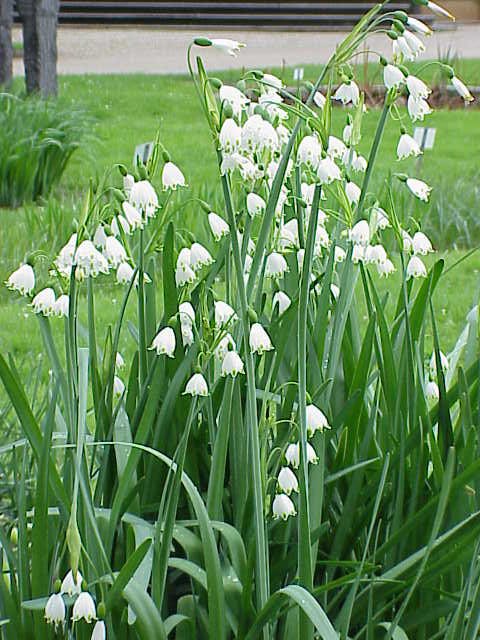
Field Garlic
Allium oleraceum
Allium oleraceum, the field garlic, is a Eurasian species of wild onion. It is a bulbous perennial that grows wild in dry places, reaching 30 centimetres (12 in) in height.
Photo: Wikimedia Commons (CC) via https://en.wikipedia.org/wiki/Allium_oleraceum
Taxonomy & Classification
Kingdom
Plantae
Phylum
Tracheophyta
Class
Liliopsida
Order
Asparagales
Family
Amaryllidaceae
Genus
Allium
Field Garlic belongs to the family Amaryllidaceae, order Asparagales, within the Liliopsida class.
Species Profile
Allium oleraceum, the field garlic, is a Eurasian species of wild onion. It is a bulbous perennial that grows wild in dry places, reaching 30 centimetres (12 in) in height. It reproduces by seed, bulbs and by the production of small bulblets in the flower head. Unlike A. vineale, it is very rare with A. oleraceum to find flower-heads containing bulbils only. In addition, the spathe in A. oleraceum is in two parts.
Field Garlic faces severe population declines due to intensive agricultural practices that eliminate wild grassland habitats and widespread use of herbicides that target bulbous plants. Urban development and habitat fragmentation have further reduced suitable growing areas, while climate change threatens the specific temperature and moisture conditions this species requires for successful reproduction.
Key Facts
Habitat & Distribution
Field Garlic occupies dry grasslands, meadows, field margins, and disturbed soils in temperate regions, typically growing in well-drained sandy or chalky soils. The species is found in open habitats including roadsides, waste ground, and traditional agricultural landscapes with low-intensity management.
Threats
IUCN Red List: Critically Endangered
Field Garlic faces severe population declines due to intensive agricultural practices that eliminate wild grassland habitats and widespread use of herbicides that target bulbous plants. Urban development and habitat fragmentation have further reduced suitable growing areas, while climate change threatens the specific temperature and moisture conditions this species requires for successful reproduction.
Agricultural intensification and herbicide use
Grassland conversion and fragmentation
Habitat loss from urban development
Climate change impacts on reproduction
Competition from invasive plant species
National vs Global Threat Status
How this species is assessed at the national level compared to its IUCN global status (CR).
| Country | National Status | Global Status | Comparison |
|---|---|---|---|
| EU | LCLeast Concern | CRCritically Endangered | Lower local risk |
| EU | LCLeast Concern | CRCritically Endangered | Lower local risk |
National Red List data sourced from the National Red List Project (nationalredlist.org, ZSL) and country-specific Red List authorities.
Community Sightings
Report a sightingNo community sightings yet. Be the first to report!
Sources & Attribution
How to Cite
IUCN: IUCN (2025). The IUCN Red List of Threatened Species. Version 2025-1. Available at: https://www.iucnredlist.org. doi:10.2305/IUCN.UK.2025-1.RLTS
GBIF: GBIF.org (2025). GBIF Home Page. Available at: https://www.gbif.org
National Red Lists: ZSL (2025). National Red List. Zoological Society of London. Available at: https://www.nationalredlist.org
This page: SpeciesRadar (2025). Field Garlic (Allium oleraceum). SpeciesRadar: Intelligence for Earth's Biodiversity. Available at: https://speciesradar.org/species/field-garlic