ENEndangered

Fahlbrauner Schirmling

Lepiota cingulum

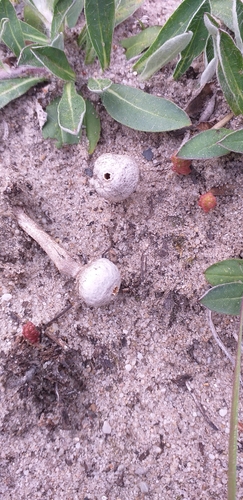
Fahlbrauner Schirmling (Lepiota cingulum) is a small to medium-sized mushroom characterized by its pale brown cap with distinctive scales and a slender stem with a prominent ring. This saprophytic fungus plays a crucial ecological role in decomposing organic matter in forest ecosystems, helping to recycle nutrients back into the soil.

01Classification

Taxonomy & Classification

Kingdom

Fungi

Phylum

Basidiomycota

Class

Agaricomycetes

Order

Agaricales

Family

Agaricaceae

Genus

Lepiota

Fahlbrauner Schirmling belongs to the family Agaricaceae, order Agaricales, within the Agaricomycetes class.

02Description

Species Profile

Fahlbrauner Schirmling (Lepiota cingulum) is a small to medium-sized mushroom characterized by its pale brown cap with distinctive scales and a slender stem with a prominent ring. This saprophytic fungus plays a crucial ecological role in decomposing organic matter in forest ecosystems, helping to recycle nutrients back into the soil.

Fahlbrauner Schirmling (Lepiota cingulum) is declining primarily due to habitat loss and degradation of its specialized grassland and woodland edge environments. Agricultural intensification, urban development, and changes in land management practices have significantly reduced the availability of suitable habitats for this fungal species.

Key Facts

IUCN StatusEndangered (EN)
GroupFungi
03Habitat

Habitat & Distribution

Lepiota cingulum typically inhabits deciduous and mixed forests with rich, humus-laden soils, particularly favoring areas with abundant leaf litter and fallen woody debris. The species shows a preference for partially shaded forest floors with consistent moisture levels and established mycorrhizal associations with mature trees.

TERRESTRIALMajor
04Threats

Threats

!

IUCN Red List: Endangered

Fahlbrauner Schirmling (Lepiota cingulum) is declining primarily due to habitat loss and degradation of its specialized grassland and woodland edge environments. Agricultural intensification, urban development, and changes in land management practices have significantly reduced the availability of suitable habitats for this fungal species.

Habitat loss from agricultural intensification

HighOngoing

Urban development and land conversion

HighOngoing

Changes in grassland management practices

MediumOngoing

Climate change affecting soil moisture regimes

MediumOngoing

Nitrogen deposition and soil chemistry changes

MediumOngoing
Community

Community Sightings

Report a sighting

No community sightings yet. Be the first to report!

07Sources

Sources & Attribution

How to Cite

IUCN: IUCN (2025). The IUCN Red List of Threatened Species. Version 2025-1. Available at: https://www.iucnredlist.org. doi:10.2305/IUCN.UK.2025-1.RLTS

GBIF: GBIF.org (2025). GBIF Home Page. Available at: https://www.gbif.org

This page: SpeciesRadar (2025). Fahlbrauner Schirmling (Lepiota cingulum). SpeciesRadar: Intelligence for Earth's Biodiversity. Available at: https://speciesradar.org/species/fahlbrauner-schirmling

Full citation guide & data usage terms