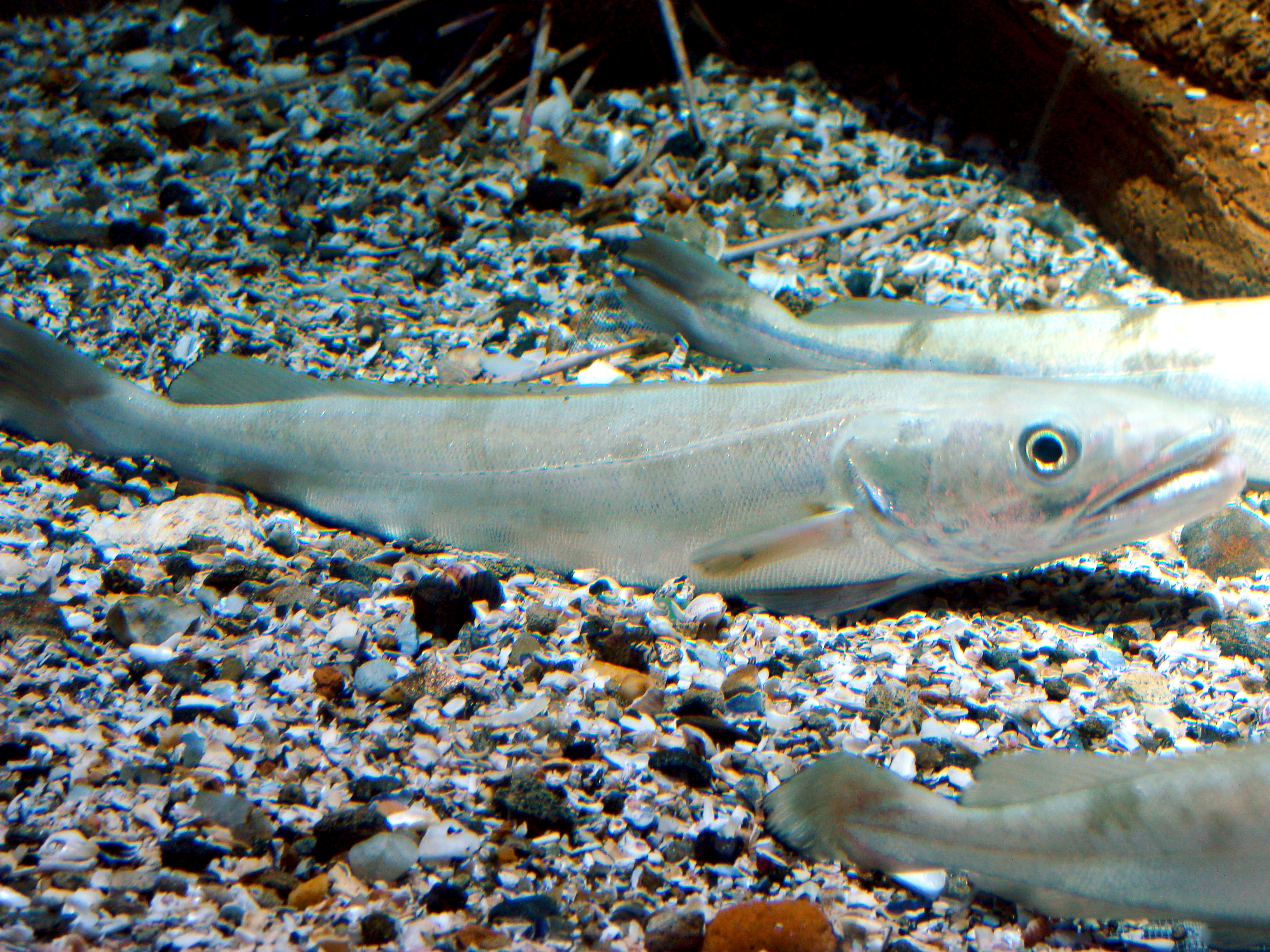
Blue Ling
Merluccius merluccius
Photo: Wikimedia Commons (CC) via https://en.wikipedia.org/wiki/Merluccius_merluccius
Overview
Merluccius merluccius is an elongated, silvery-grey species with a large head, prominent jaws, and sharp teeth adapted for capturing prey. It is a demersal predator, typically found near the seafloor by day and moving into midwater to feed at night on smaller fish, cephalopods, and crustaceans. As both predator and prey within marine food webs, it plays a significant role in structuring the communities it inhabits, while also supporting long-established commercial fisheries across much of its range.
The species occupies continental shelf and upper slope waters across the Northeast Atlantic and Mediterranean, extending into the Black Sea in limited areas. Its range spans from Norway and Iceland south to Mauritania and Senegal, encompassing the waters of numerous European, North African, and Mediterranean nations, with additional occurrences noted in other Atlantic regions.
Population declines are attributed largely to sustained commercial fishing pressure, both targeted and as bycatch in mixed bottom-trawl fisheries, which also damages seafloor habitats used for spawning and juvenile development. Juveniles are frequently caught before reaching reproductive maturity, reducing recruitment into the adult population. Additionally, warming ocean temperatures are altering prey distribution and forcing shifts in the species' habitat range, compounding pressures from direct exploitation.
Management responses include catch quotas, minimum landing sizes, and seasonal or area-based fishing restrictions implemented through regional fisheries bodies, particularly within European Union waters. Some stocks are subject to recovery plans aimed at rebuilding spawning biomass. Enforcement and effectiveness vary considerably across the species' wide range.
Population trends remain unknown due to inconsistent monitoring across jurisdictions, though the combination of ongoing fishing pressure, habitat disturbance, and climate-related range shifts suggests continued vulnerability. Long-term recovery will depend on sustained, coordinated management across the many nations sharing this stock.
Blue Ling are mainly threatened by too much fishing, including bottom trawling (dragging heavy nets along the seafloor) that damages their habitat, and young fish getting accidentally caught in nets meant for other species. On top of this, warming oceans are shifting where these fish can live and reducing the food sources they depend on. All of these pressures are currently ongoing and show no signs of easing, suggesting the overall threat level is stable to intensifying.
Habitat
European hake inhabits continental shelf and slope waters of the Northeast Atlantic, typically found at depths between 70-400 meters over muddy and sandy bottoms. Adults prefer deeper waters along the continental slope, while juveniles are commonly found in shallower coastal areas and estuaries.
Threatened in Albania

Frequently asked questions
Why is Blue Ling classified as Vulnerable?
Where does Blue Ling live?
What are the main threats to Blue Ling?
Get weekly conservation intelligence
One short digest a week of the most striking species and country data we ship, plus breaking conservation news paired with our database where it matters.
Free, no spam. One-click unsubscribe in every email.