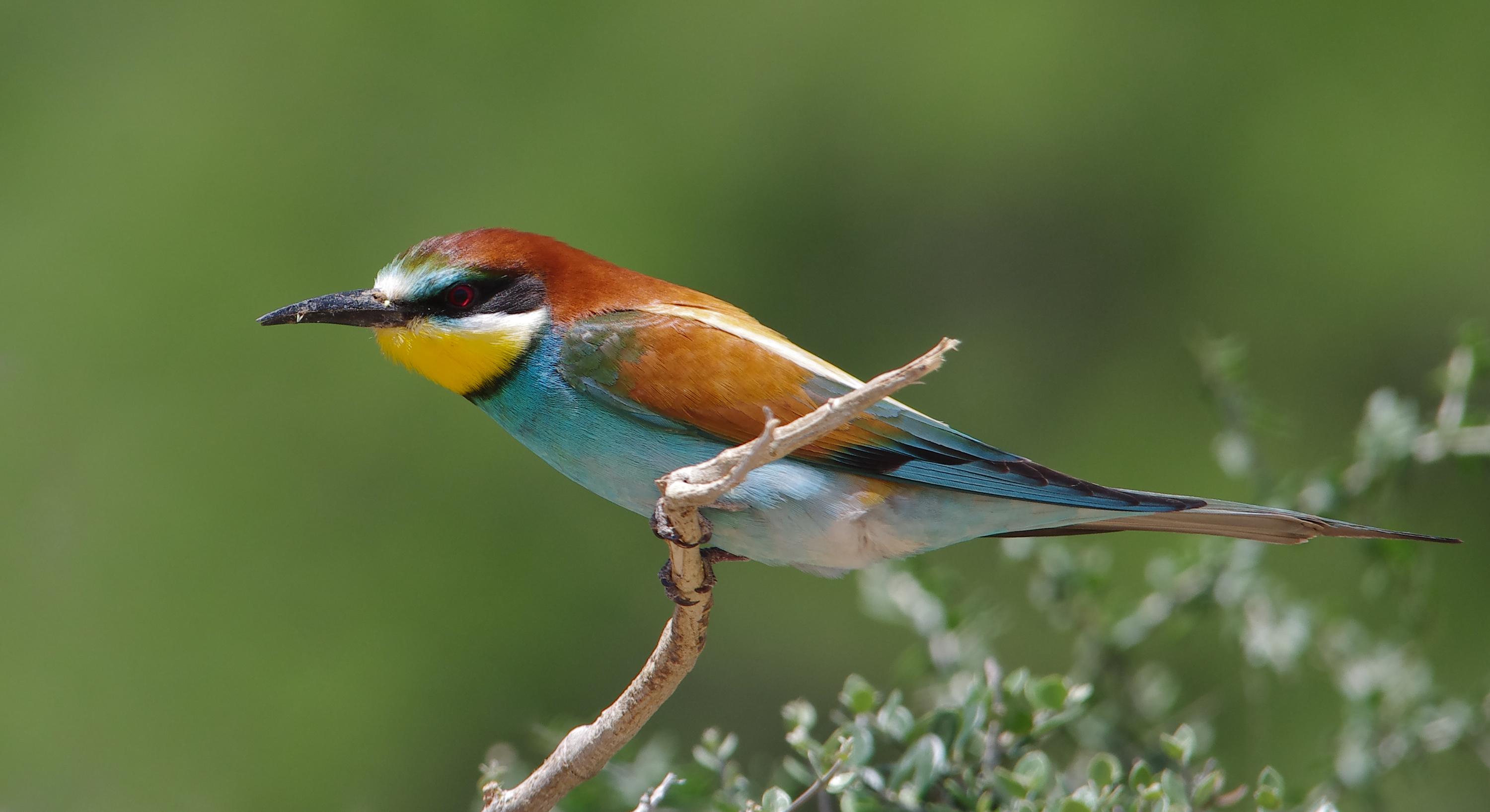
Bee-eater
Merops apiaster
Photo: Wikimedia Commons (CC) via https://en.wikipedia.org/wiki/European_bee-eater
Overview
A detailed profile for this species is sourced from the IUCN Red List of Threatened Species as assessments become available.
European Bee-eaters face significant population declines across their range due to intensive agricultural practices that reduce insect prey availability and eliminate nesting sites in sandy banks and quarries. Climate change is altering migration patterns and breeding success, while habitat fragmentation from urban development and infrastructure projects destroys traditional colony sites. Pesticide use in agricultural areas has dramatically reduced flying insect populations, forcing birds to travel greater distances to find adequate food sources during the critical breeding season.
Habitat
European Bee-eaters inhabit open countryside with scattered trees, river valleys, and areas with exposed sandy or clay banks suitable for excavating nesting burrows. They prefer agricultural landscapes with hedgerows, orchards, and grasslands that support abundant flying insect populations, particularly near water sources and traditional quarry sites.
Frequently asked questions
Why is Bee-eater classified as Vulnerable?
Where does Bee-eater live?
What are the main threats to Bee-eater?
Get weekly conservation intelligence
One short digest a week of the most striking species and country data we ship, plus breaking conservation news paired with our database where it matters.
Free, no spam. One-click unsubscribe in every email.