English Parasite Needle Lichen
Sphinctrina anglica
Overview
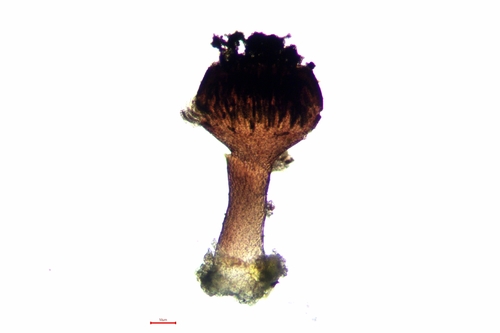
The English Parasite Needle Lichen (Sphinctrina anglica) is a rare parasitic lichen species that forms minute, dark fruiting bodies resembling tiny black pins or needles on the surface of its host lichens. This obligate parasite specifically targets certain crustose lichens, particularly those in coastal and maritime environments, playing a specialized ecological role as a secondary colonizer that may influence lichen community dynamics.
English Parasite Needle Lichen is declining primarily due to air pollution, particularly nitrogen deposition and sulfur compounds, which alter the chemistry of its host lichens and bark substrates. Habitat loss from urbanization and changes in woodland management practices have further reduced suitable sites where this specialized parasitic lichen can survive.
Habitat
Sphinctrina anglica inhabits exposed coastal rocks, sea cliffs, and maritime stone walls where it parasitizes specific crustose lichen hosts. The species is typically found in areas with high humidity and salt spray influence, particularly on limestone and calcareous substrates in coastal Britain.
Other threatened species in Sphinctrinaceae
Frequently asked questions
Why is English Parasite Needle Lichen classified as Endangered?
Where does English Parasite Needle Lichen live?
What are the main threats to English Parasite Needle Lichen?
Get weekly conservation intelligence
One short digest a week of the most striking species and country data we ship, plus breaking conservation news paired with our database where it matters.
Free, no spam. One-click unsubscribe in every email.