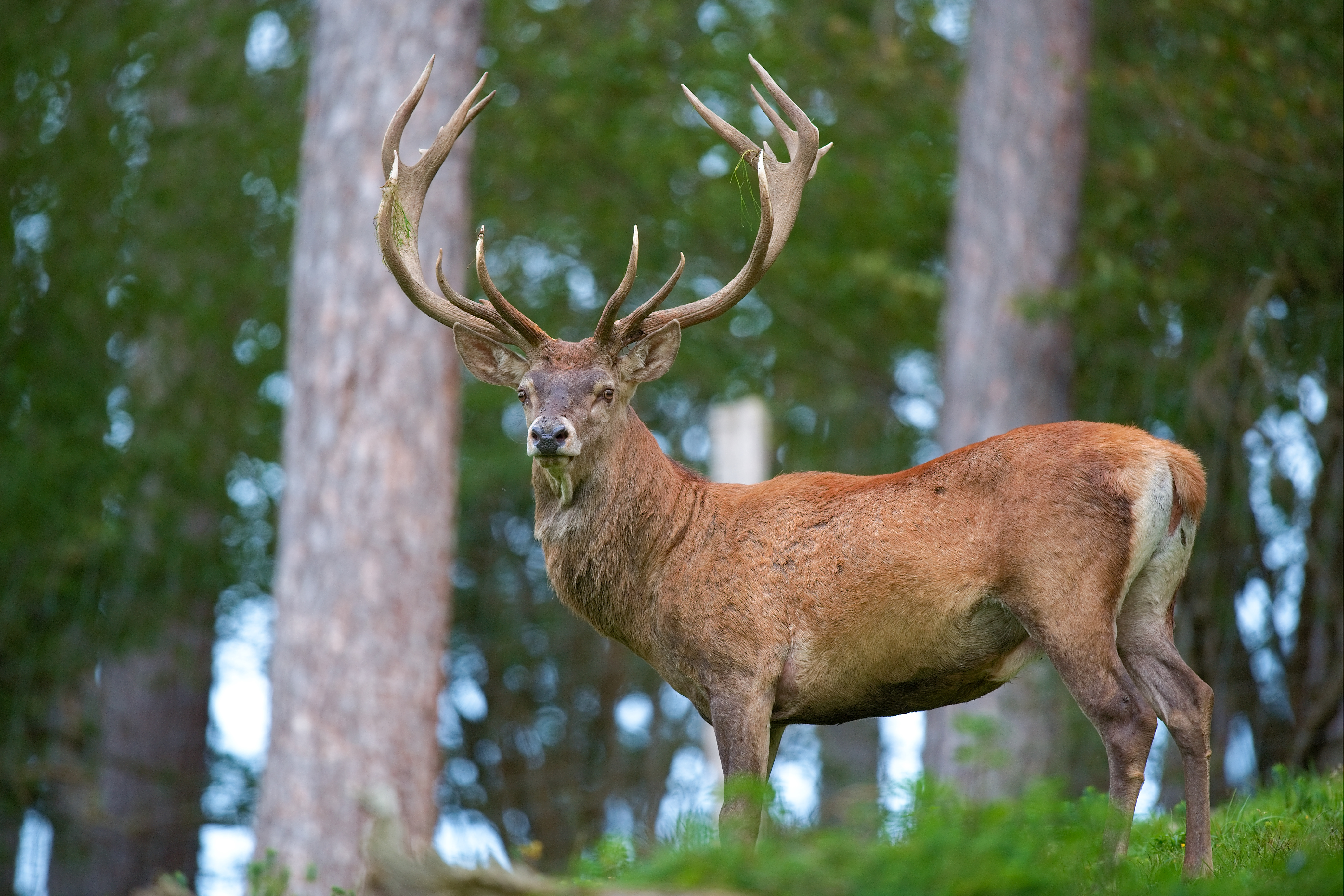
elk
Cervus elaphus
Photo: Wikimedia Commons (CC) via https://en.wikipedia.org/wiki/Red_deer
Overview
The red deer is one of the largest deer species. A male red deer is called a stag or hart, and a female is called a hind. The red deer inhabits most of Europe, the Caucasus Mountains region, Anatolia, Iran, and parts of Western Asia.
It also inhabits the Atlas Mountains of Northern Africa, being the only living species of deer to inhabit Africa. Red deer have been introduced to other areas, including Australia, New Zealand, the United States, Canada, Peru, Uruguay, Chile and Argentina. In many parts of the world, the meat (venison) from red deer is used as a food source.
Elk populations face significant pressure from habitat loss and fragmentation due to agricultural expansion, urban development, and infrastructure projects that disrupt migration corridors. Hunting pressure, disease transmission from livestock, and climate change impacts on food availability and seasonal patterns further threaten population stability across their range.
Habitat
Elk inhabit temperate and boreal forests, grasslands, alpine meadows, and woodland edges across mountainous and northern regions. They utilize seasonal ranges from valley bottoms to high elevation summer pastures, requiring large territories with access to both forested cover and open grazing areas.
Other threatened species in Cervidae


Frequently asked questions
Why is elk classified as Vulnerable?
Where does elk live?
What are the main threats to elk?
Get weekly conservation intelligence
One short digest a week of the most striking species and country data we ship, plus breaking conservation news paired with our database where it matters.
Free, no spam. One-click unsubscribe in every email.