
Elf Ears Lichen
Normandina pulchella
Photo: Wikimedia Commons (CC) via https://en.wikipedia.org/wiki/Normandina_pulchella
Overview
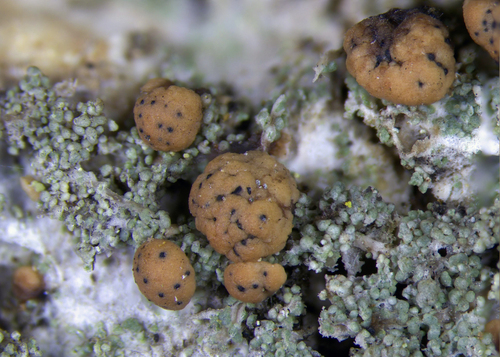
Normandina pulchella, commonly known as the elf-ear lichen or blue heart, is a species of squamulose lichen in the family Verrucariaceae. This cosmopolitan species is widely distributed across both hemispheres, where it thrives in moist microhabitats. It favours moss-covered deciduous trees and rocks, often colonising over mosses and bryophytes.
It occasionally grows on bare bark and on other lichens. Distinctive features of N. pulchella include its bluish-green squamules (scales) with sharply raised margins, non-reactivity to standard chemical spot tests, and growth in humid habitats.
Initially, Nannochloris normandinae, a green alga, was thought to be its photobiont. More recent studies, however, have revised this understanding, with Diplosphaera chodatii now recognised as the algal...
Elf Ears Lichen (Normandina pulchella) is declining primarily due to habitat loss and degradation from deforestation, urbanization, and agricultural expansion. Air pollution and climate change are also contributing to population declines by altering the specific environmental conditions this sensitive lichen species requires.
Habitat
Normandina pulchella growing amongst moss on tree bark Normandina pulchella has a cosmopolitan distribution, growing across diverse climates and regions. The Swedish lichenologist Gunnar Degelius, in his 1934 phytogeographical study, highlights the species' oceanic distribution in Europe. It predominantly occupies coastal areas in Northern Europe, including Scandinavia and the British Isles, and...
Other threatened species in Verrucariaceae

Frequently asked questions
Why is Elf Ears Lichen classified as Endangered?
Where does Elf Ears Lichen live?
What are the main threats to Elf Ears Lichen?
Get weekly conservation intelligence
One short digest a week of the most striking species and country data we ship, plus breaking conservation news paired with our database where it matters.
Free, no spam. One-click unsubscribe in every email.