Bicolored Horsehair Lichen
Bryoria bicolor
Overview
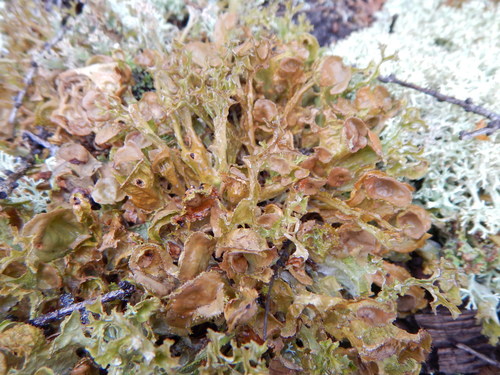
Electric Horsehair Lichen (Bryoria bicolor) is a distinctive fruticose lichen that forms pendant, hair-like strands hanging from tree branches, displaying characteristic pale greenish-gray coloration with darker banded sections. This epiphytic species plays a crucial ecological role in forest ecosystems by providing nesting material for birds, food for wildlife, and contributing to nutrient cycling through its ability to capture atmospheric moisture and particles.
Electric Horsehair Lichen faces severe decline primarily due to air pollution, particularly sulfur dioxide and nitrogen compounds from industrial activities and vehicle emissions, which are highly toxic to epiphytic lichens. Habitat loss through deforestation and urban development has eliminated many suitable host trees, while climate change is altering precipitation patterns and temperature regimes that this sensitive species requires.
Habitat
Bryoria bicolor grows exclusively on the bark of mature coniferous trees, particularly spruce, fir, and pine species in cool, humid montane and boreal forests. The species requires stable microclimatic conditions with high air moisture levels and minimal air pollution, typically found in undisturbed old-growth forest environments.
Other threatened species in Parmeliaceae


Frequently asked questions
Why is Bicolored Horsehair Lichen classified as Endangered?
Where does Bicolored Horsehair Lichen live?
What are the main threats to Bicolored Horsehair Lichen?
Get weekly conservation intelligence
One short digest a week of the most striking species and country data we ship, plus breaking conservation news paired with our database where it matters.
Free, no spam. One-click unsubscribe in every email.