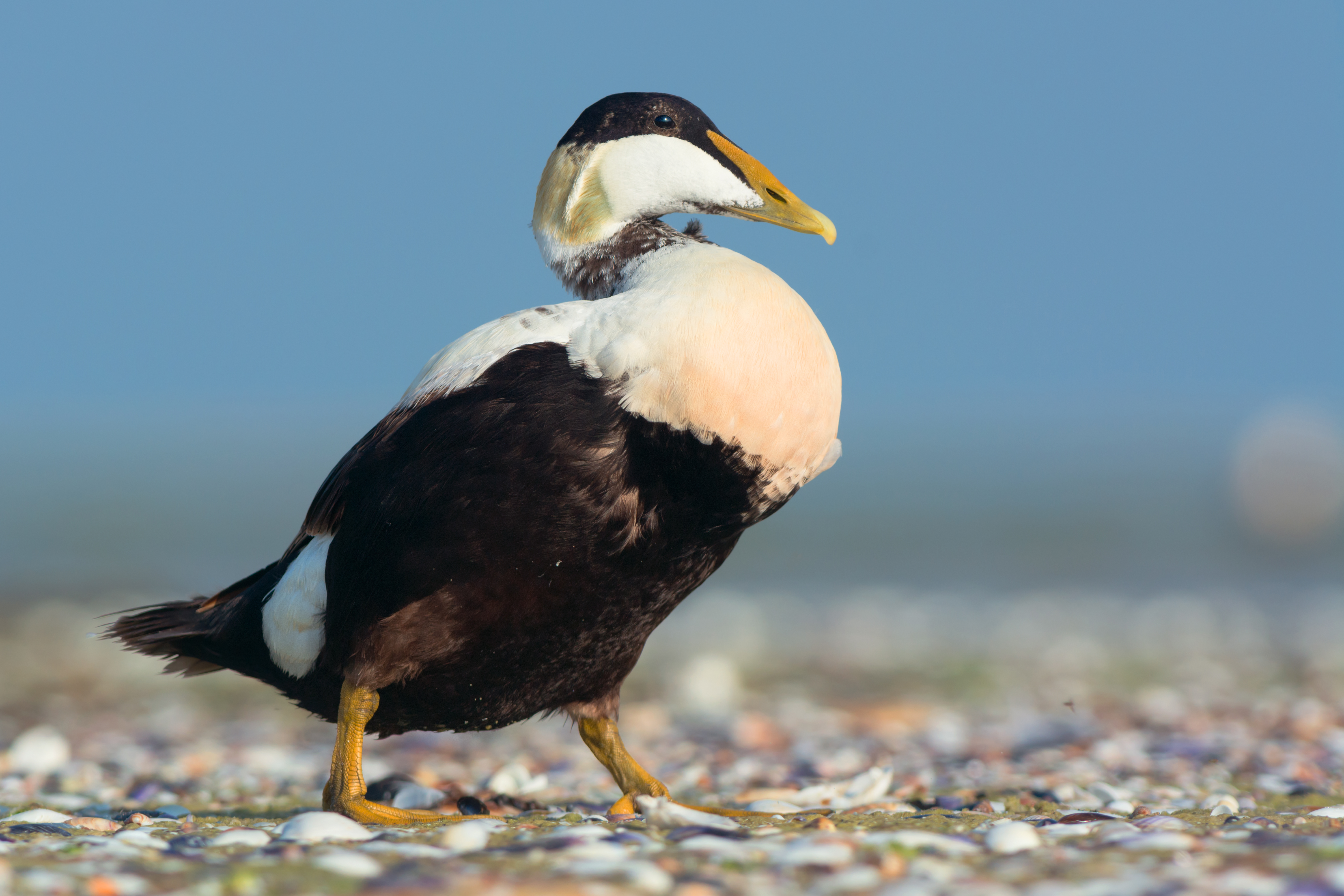
American Eider
Somateria mollissima
Photo: Wikimedia Commons (CC) via https://en.wikipedia.org/wiki/Common_eider
Overview
The common eider, also called St. Cuthbert's duck or Cuddy's duck, is a large sea-duck that is distributed over the northern coasts of Europe, North America and eastern Siberia. It breeds in Arctic and some northern temperate regions, but winters somewhat farther south in temperate zones, when it can form large flocks on coastal waters. It can fly at speeds up to 113 km/h (70 mph).
Common Eider populations are declining primarily due to climate change impacts on Arctic breeding grounds, including altered sea ice patterns and changing food availability. Hunting pressure, oil spills, and coastal development further threaten populations, while avian influenza outbreaks have caused significant mortality events in recent years.
Habitat
This species dives for crustaceans and molluscs, with mussels being a favoured food. The eider will eat mussels by swallowing them whole; the shells are then crushed in their gizzard and excreted. When eating a crab, the eider will remove all of its claws and legs, and then eat the body in a similar fashion.
It is abundant, with populations of about 1.5–2 million birds in both North America and...
Other threatened species in Anatidae



Frequently asked questions
Why is American Eider classified as Endangered?
Where does American Eider live?
What are the main threats to American Eider?
Get weekly conservation intelligence
One short digest a week of the most striking species and country data we ship, plus breaking conservation news paired with our database where it matters.
Free, no spam. One-click unsubscribe in every email.