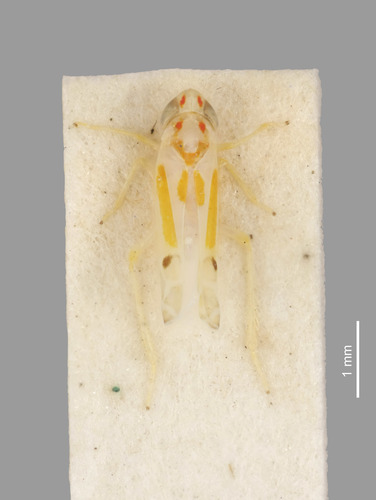
Edith's Leafhopper
Chlorita edithae
Photo: Photo: (c) Perth Museum and Art Gallery, some rights reserved (CC BY-NC)
Overview
Edith's Leafhopper (Chlorita edithae) is a small, delicate insect belonging to the family Cicadellidae, distinguished by the slender, laterally compressed body plan and piercing-sucking mouthparts characteristic of leafhoppers. Like many members of its genus, it likely displays subtle green or yellowish coloration that provides camouflage among host plant foliage, along with the powerful hind legs used for rapid, springing movement when disturbed. This species is classified as Critically Endangered (CR) by the IUCN, reflecting a severely restricted range and a population trend that is currently decreasing.
Leafhoppers in this genus tend to be highly host-specific, feeding on the phloem or mesophyll of particular plant species, which makes them acutely vulnerable when their specific vegetation community is degraded or lost. The primary drivers of decline are believed to include habitat conversion for agriculture or development, fragmentation of remaining suitable vegetation, and the resulting isolation of small, genetically vulnerable subpopulations. Because Edith's Leafhopper occupies a narrow ecological niche, even localized disturbances can have outsized effects on its survival prospects.
Targeted field surveys and taxonomic research remain essential to clarify its precise range, host plant associations, and population size, as such baseline data are still limited for many small-bodied invertebrates of conservation concern. Encouragingly, growing global attention to insect conservation has led to increased funding for invertebrate red-listing and habitat protection initiatives, and renewed interest from entomologists in documenting rare and range-restricted leafhoppers offers a genuine opportunity to improve knowledge of this species before further declines occur. Protecting remaining fragments of its native habitat, supporting regional biodiversity surveys, and integrating invertebrates into broader ecosystem conservation plans represent practical steps that could meaningfully improve its long-term outlook.
Chlorita edithae faces severe threats from habitat destruction due to agricultural expansion and urban development within its extremely limited range. The species' restricted distribution makes it particularly vulnerable to localized environmental changes, while collection pressure for the shell trade has further reduced wild populations. Climate change poses an additional threat through altered precipitation patterns that could affect the moisture-dependent microhabitats this terrestrial gastropod requires.
Habitat
This terrestrial snail inhabits moist limestone areas and rocky outcrops with dense vegetation cover, typically found in tropical forest understory environments. The species requires specific microhabitat conditions with consistent moisture levels and calcium-rich substrates for shell development.
Conservation measures underway
Other threatened species in CICADELLIDAE
Threatened in St. Helena

Frequently asked questions
Why is Edith's Leafhopper classified as Critically Endangered?
Where does Edith's Leafhopper live?
What are the main threats to Edith's Leafhopper?
Get weekly conservation intelligence
One short digest a week of the most striking species and country data we ship, plus breaking conservation news paired with our database where it matters.
Free, no spam. One-click unsubscribe in every email.