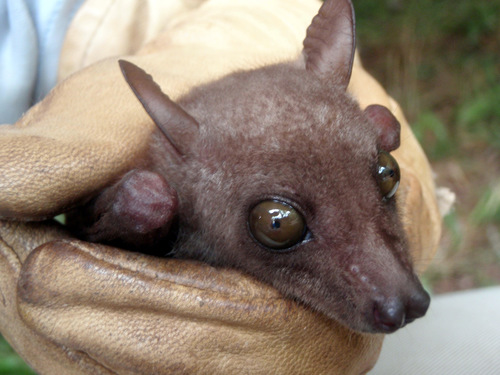
East african little collared fruit bat
Myonycteris relicta
Photo: iNaturalist: (c) Carrie Seltzer, some rights reserved (CC BY)
Overview
The East African little collared fruit bat is a species of megabat in the family Pteropodidae. It is found in Kenya, Tanzania, and Zimbabwe. Its natural habitats are subtropical or tropical dry forests and moist savanna.
The East African little collared fruit bat faces significant threats from habitat loss due to deforestation and agricultural expansion across its limited range in East Africa. Its restricted distribution and specialized habitat requirements make populations particularly vulnerable to environmental changes and human encroachment.
Habitat
This species inhabits tropical moist forests and woodland areas in East Africa, typically roosting in forest canopies and foraging in fruiting trees within primary and secondary forest habitats.
Frequently asked questions
Why is East african little collared fruit bat classified as Vulnerable?
Where does East african little collared fruit bat live?
What are the main threats to East african little collared fruit bat?
Get weekly conservation intelligence
One short digest a week of the most striking species and country data we ship, plus breaking conservation news paired with our database where it matters.
Free, no spam. One-click unsubscribe in every email.