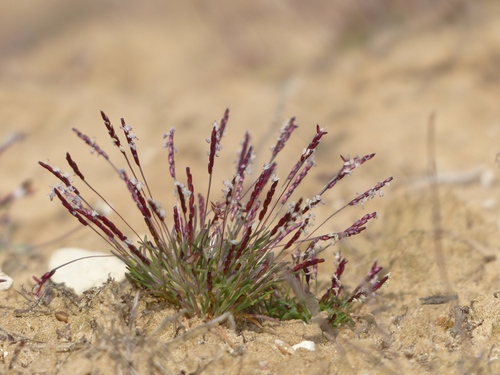
Early Sand-grass
Mibora minima
Photo: iNaturalist: (c) Julien Bottinelli, some rights reserved (CC BY-NC), uploaded by Julien Bottinelli
Overview
Mibora minima, the early sandgrass, is a small annual species of grass that is native in western and southwestern Europe.
Early Sand-grass is declining primarily due to habitat loss from coastal development, agricultural intensification, and recreational activities that disturb its specialized sandy habitat. Climate change and sea level rise pose additional threats to this coastal species by altering the dynamics of its ephemeral sandy environments.
Habitat
Other threatened species in Poaceae
Frequently asked questions
Why is Early Sand-grass classified as Endangered?
Where does Early Sand-grass live?
What are the main threats to Early Sand-grass?
Get weekly conservation intelligence
One short digest a week of the most striking species and country data we ship, plus breaking conservation news paired with our database where it matters.
Free, no spam. One-click unsubscribe in every email.