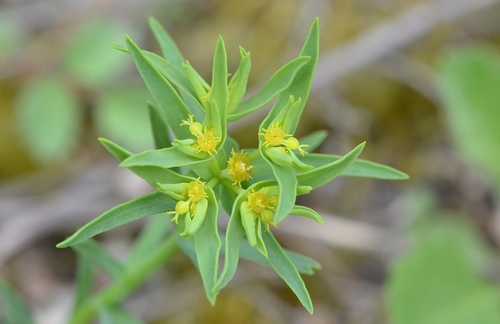
Dwarf Spurge
Euphorbia exigua
Photo: iNaturalist: (c) Cordula Bernert, some rights reserved (CC BY-NC), uploaded by Cordula Bernert
Overview
Euphorbia exigua, dwarf spurge or small spurge, is a species of Euphorbia in the spurge family (Euphorbiaceae), native to Europe, northern Africa and the Near East, and invasive worldwide.
Dwarf Spurge faces significant pressure from agricultural intensification and habitat conversion, which has reduced suitable arable and disturbed ground habitats across its range. Modern farming practices, including increased herbicide use and changes in crop rotation patterns, have particularly impacted this small annual species that depends on traditional agricultural systems.
Habitat
Dwarf Spurge occupies arable fields, cultivated ground, gardens, waste places, and disturbed sandy or chalky soils, typically in open sunny locations. This small annual herb thrives in nutrient-poor, well-drained soils and is often associated with traditional extensive farming systems and field margins.
Other threatened species in Euphorbiaceae
Frequently asked questions
Why is Dwarf Spurge classified as Vulnerable?
Where does Dwarf Spurge live?
What are the main threats to Dwarf Spurge?
Get weekly conservation intelligence
One short digest a week of the most striking species and country data we ship, plus breaking conservation news paired with our database where it matters.
Free, no spam. One-click unsubscribe in every email.