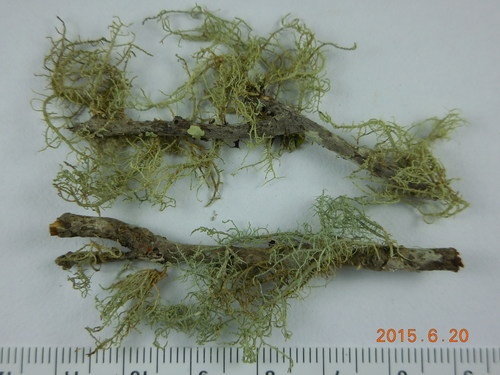
Lustrous Beard Lichen
Usnea glabrata
Photo: iNaturalist: (c) tom_carlberg, some rights reserved (CC BY-NC), uploaded by tom_carlberg
Overview
Usnea glabrata, the lustrous beard lichen, is a species of beard lichen in the family Parmeliaceae. This small, shrubby species typically grows 5–10 centimetres tall. Distinguished by its somewhat shiny surface, slender branches that taper at both ends, and the presence of powdery reproductive structures near the branch tips, this lichen primarily grows on tree bark in moderately open, humid forests throughout boreal and temperate regions of the Northern Hemisphere.
U. glabrata is considered vulnerable in parts of its range due to its small size making it easy to overlook and its relatively sparse collection in recent decades.
Usnea glabrata, a rare lichen species, faces severe decline primarily due to air pollution and habitat degradation. As an epiphytic lichen highly sensitive to atmospheric pollutants, particularly sulfur dioxide and nitrogen compounds, it has experienced dramatic population reductions in areas with poor air quality.
Habitat
Usnea glabrata is primarily an epiphytic lichen, growing on the bark of various tree species. In East Fennoscandia, it has been documented most frequently on alder, followed by spruce, birch, and willow, with occasional occurrences on Populus and Sorbus. The species typically inhabits moderately open and humid mixed forests. It often occurs along the shores of water bodies and can also be found...
Other threatened species in Parmeliaceae


Frequently asked questions
Why is Lustrous Beard Lichen classified as Endangered?
Where does Lustrous Beard Lichen live?
What are the main threats to Lustrous Beard Lichen?
Get weekly conservation intelligence
One short digest a week of the most striking species and country data we ship, plus breaking conservation news paired with our database where it matters.
Free, no spam. One-click unsubscribe in every email.