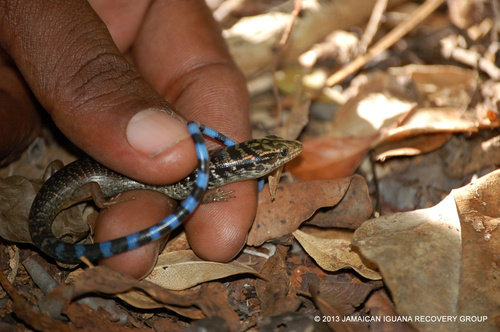
Blue-tailed Galliwasp
Celestus duquesneyi
Photo: (c) diploglossusmonotropis, all rights reserved, uploaded by diploglossusmonotropis
Overview
A detailed profile for this species is sourced from the IUCN Red List of Threatened Species as assessments become available.
Celestus duquesneyi faces severe threats from habitat destruction due to agricultural expansion and urban development in its limited range in Jamaica. The species' restricted distribution makes it extremely vulnerable to localized habitat loss, while introduced predators and competitors further pressure remaining populations. Climate change poses additional risks through altered precipitation patterns affecting the moist forest environments this lizard depends upon.
Habitat
This endemic Jamaican lizard inhabits moist limestone forests and forest edges in mountainous regions. It requires areas with dense vegetation cover and adequate moisture levels, typically found in undisturbed or minimally disturbed forest environments.
Conservation measures underway
Other threatened species in DIPLOGLOSSIDAE
Threatened in Jamaica


Frequently asked questions
Why is Blue-tailed Galliwasp classified as Critically Endangered?
Where does Blue-tailed Galliwasp live?
What are the main threats to Blue-tailed Galliwasp?
Get weekly conservation intelligence
One short digest a week of the most striking species and country data we ship, plus breaking conservation news paired with our database where it matters.
Free, no spam. One-click unsubscribe in every email.