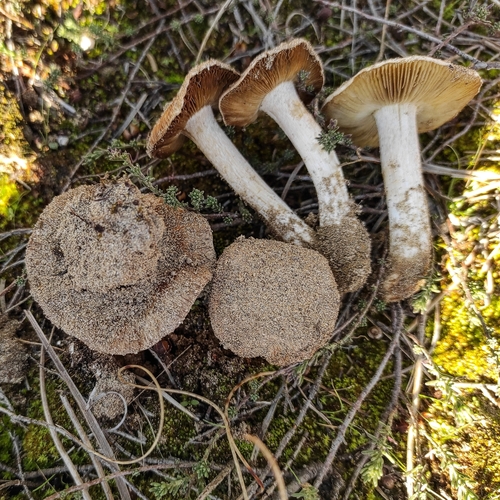
Dune Fibrecap
Inocybe dunensis
Photo: iNaturalist: (c) Mark Mowlazadeh, some rights reserved (CC BY-NC), uploaded by Mark Mowlazadeh
Overview
The Dune Fibrecap is a small to medium-sized mushroom characterized by its fibrous, often radially streaked cap surface and typically brown to tan coloration. This mycorrhizal fungus forms essential symbiotic relationships with coastal vegetation, particularly helping stabilize nutrient-poor sandy soils through its extensive underground fungal networks.
Dune Fibrecap faces significant threats from coastal development, recreational activities, and climate change impacts on its specialized dune habitats. The species' restricted distribution to fragile coastal sand dune ecosystems makes it particularly vulnerable to habitat loss and degradation from human activities and rising sea levels.
Habitat
Coastal sand dunes and sandy grasslands near the sea, typically associated with marram grass and other specialized dune vegetation. The species forms mycorrhizal associations with dune plants in these dynamic, salt-influenced environments.
Other threatened species in Inocybaceae
Frequently asked questions
Why is Dune Fibrecap classified as Vulnerable?
Where does Dune Fibrecap live?
What are the main threats to Dune Fibrecap?
Get weekly conservation intelligence
One short digest a week of the most striking species and country data we ship, plus breaking conservation news paired with our database where it matters.
Free, no spam. One-click unsubscribe in every email.