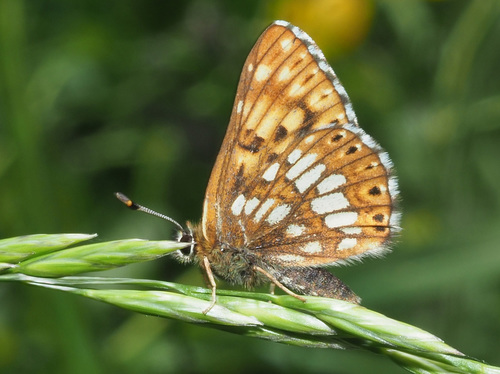
Duke of Burgundy
Hamearis lucina
Photo: iNaturalist: (c) Felix Riegel, some rights reserved (CC BY-NC), uploaded by Felix Riegel
Overview
Hamearis lucina, the Duke of Burgundy, the only member of the genus Hamearis, is a European butterfly in the family Riodinidae. For many years, it was known as the "Duke of Burgundy fritillary", because the adult's chequered pattern is strongly reminiscent of "true" fritillaries of the family Nymphalidae.
The Duke of Burgundy Fritillary faces significant population declines across its range due to habitat loss and degradation of its specialized woodland habitats. The species' dependence on specific host plants and precise microhabitat conditions makes it particularly vulnerable to changes in woodland management practices and climate-driven shifts in habitat suitability.
Habitat
Inhabits woodland clearings, rides, and edges with sparse canopy cover, particularly in deciduous and mixed woodlands where wild primrose (Primula vulgaris) and cowslip (Primula veris) grow. Requires sheltered, partially shaded areas with a mosaic of open ground and low vegetation structure.
Other threatened species in Riodinidae
Threatened in Albania

Frequently asked questions
Why is Duke of Burgundy classified as Vulnerable?
Where does Duke of Burgundy live?
What are the main threats to Duke of Burgundy?
Get weekly conservation intelligence
One short digest a week of the most striking species and country data we ship, plus breaking conservation news paired with our database where it matters.
Free, no spam. One-click unsubscribe in every email.