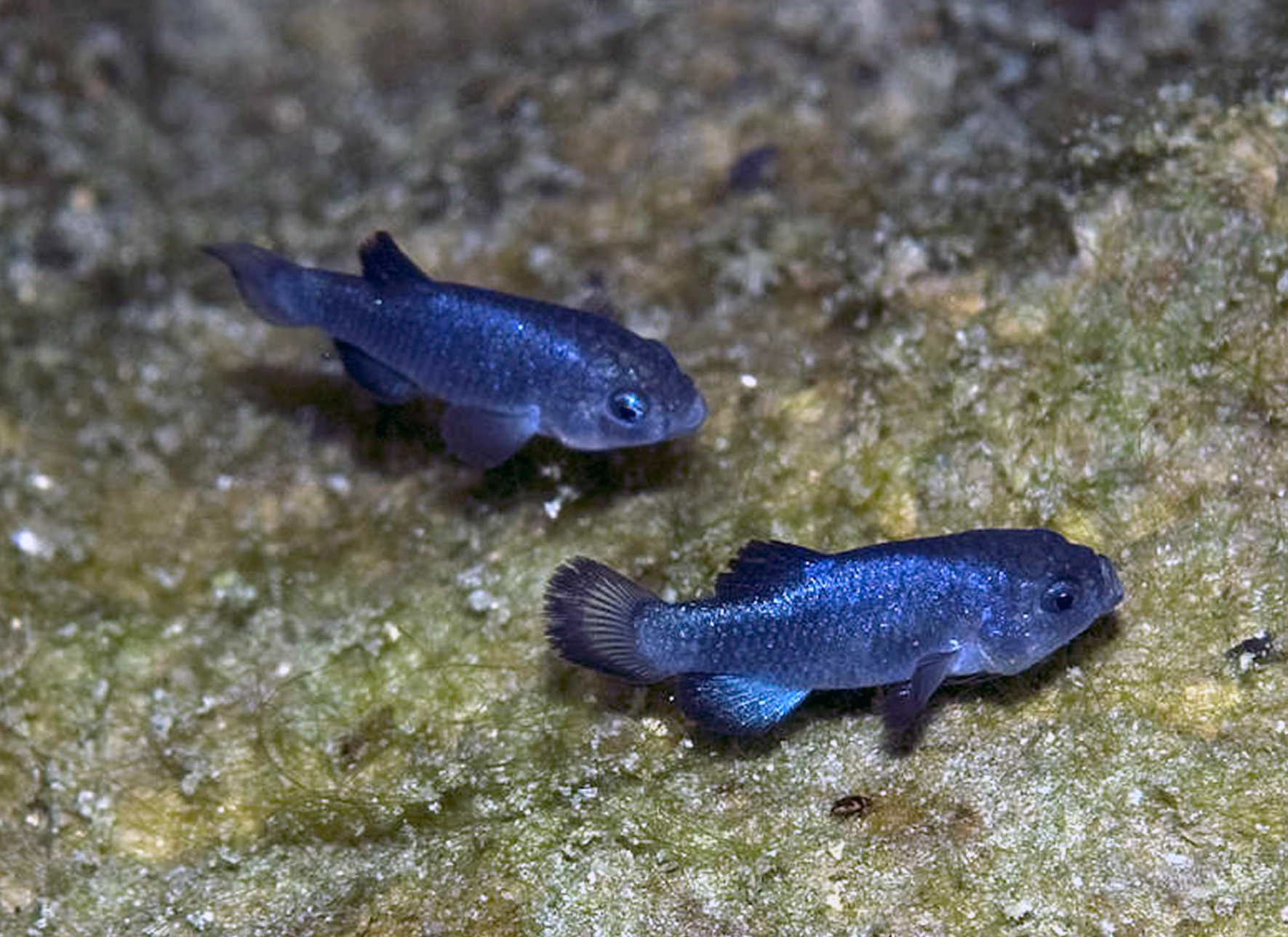
Devil's Hole Pupfish
Cyprinodon diabolis
Photo: Wikimedia Commons (CC) via https://en.wikipedia.org/wiki/Devils_Hole_pupfish
Overview
The Devils Hole pupfish is a critically endangered species of the family Cyprinodontidae (pupfishes) found only in Devils Hole, a water-filled cavern in the US state of Nevada. It was first described as a species in 1930 and is most closely related to C. nevadensis and the Death Valley pupfish.
The age of the species is unknown, with differing analyses offering ranges between one thousand and sixty thousand years. It is a small fish, with maximum lengths of up to 30 mm (1.2 in). Individuals vary in coloration based on age and sex: males are bright metallic blue while females and juveniles are more yellow.
A defining trait of this species is its lack of pelvic fins. The pupfish consumes nearly every available food resource at Devils Hole, including beetles, snails, algae, and freshwater crustaceans, with diet varying throughout the year. It is preyed on by the predaceous diving beetle species Neoclypeodytes cinctellus, which was first observed in Devils Hole in 1999 or 2000.
Reproduction occurs year-round, with spikes in the spring and fall. Females produce few eggs and the survivorship from egg to adult is low. Individuals live 10–14 months.
The Devils Hole pupfish faces an extreme extinction crisis due to its confinement to a single limestone cavern pool in Nevada's Mojave Desert. Groundwater pumping from nearby agricultural and municipal wells has lowered the water table, reducing the shallow shelf area critical for spawning and feeding. Climate change exacerbates these pressures through increased evaporation and temperature fluctuations that stress this thermally-sensitive species. The population has declined from several hundred individuals in the 1970s to fewer than 200 today, making it one of the world's most endangered vertebrates.
Habitat
The Devils Hole pupfish is endemic to Devils Hole, a single geothermal limestone cavern pool in Death Valley National Park, Nevada. This unique aquatic habitat maintains constant temperatures around 33°C (91°F) and contains a shallow limestone shelf that serves as the primary feeding and spawning area for the species.
Conservation measures underway
Other threatened species in CYPRINODONTIDAE

Threatened in Slovenia

Frequently asked questions
Why is Devil's Hole Pupfish classified as Critically Endangered?
Where does Devil's Hole Pupfish live?
What are the main threats to Devil's Hole Pupfish?
Get weekly conservation intelligence
One short digest a week of the most striking species and country data we ship, plus breaking conservation news paired with our database where it matters.
Free, no spam. One-click unsubscribe in every email.