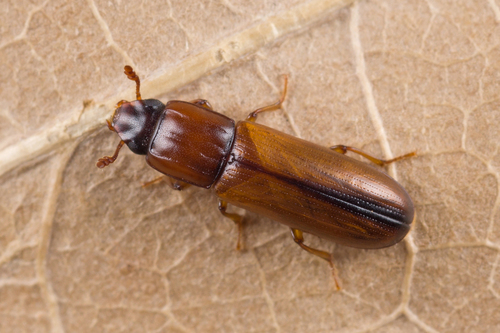
Aulonium trisulcum
Photo: iNaturalist: (c) Nikolai Vladimirov, some rights reserved (CC BY-NC), uploaded by Nikolai Vladimirov
Overview
Aulonium trisulcum is a small, elongated bark beetle with a distinctive dark head and reddish-brown body, measuring approximately 2-4mm in length. This specialized predatory beetle plays a crucial ecological role by hunting other wood-boring insects, particularly bark beetle larvae, within the subcortical layers of dead and dying trees. As a natural biocontrol agent, it helps regulate populations of forest pest species in temperate woodland ecosystems.
Aulonium trisulcum, a saproxylic beetle species, faces severe population decline primarily due to the loss and degradation of old-growth forest habitats containing the dead wood substrates it requires for survival. The species' highly specialized ecological requirements and limited dispersal ability make it extremely vulnerable to habitat fragmentation and changes in forest management practices that reduce the availability of suitable breeding sites.
Habitat
This beetle inhabits the space between bark and wood (subcortical zone) of recently dead or dying deciduous trees, particularly oak, beech, and maple species in mature temperate forests. It requires forests with sufficient dead wood retention and minimal human disturbance to maintain stable populations.
Frequently asked questions
Why is Aulonium trisulcum classified as Critically Endangered?
Where does Aulonium trisulcum live?
What are the main threats to Aulonium trisulcum?
Get weekly conservation intelligence
One short digest a week of the most striking species and country data we ship, plus breaking conservation news paired with our database where it matters.
Free, no spam. One-click unsubscribe in every email.