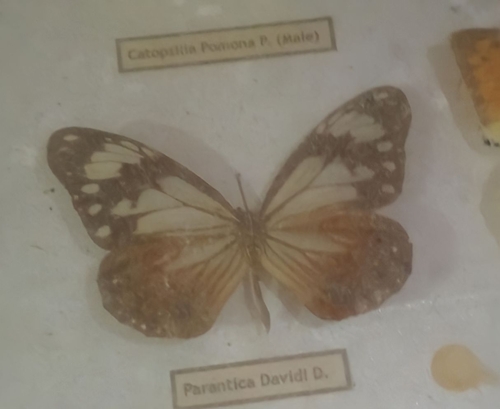
Parantica davidi
Photo: (c) ivanpalgan, some rights reserved (CC BY-NC)
Overview
Parantica davidi is a butterfly species belonging to the family Nymphalidae, subfamily Danainae, commonly known as tiger butterflies or crows. This species is endemic to specific regions of Southeast Asia, where it inhabits tropical and subtropical forest environments. Like other members of its genus, P.
davidi likely feeds on plants in the Apocynaceae and Asclepiadaceae families during its larval stage, which contain toxic compounds that make the adult butterflies unpalatable to predators. The species exhibits the characteristic wing patterns typical of Parantica butterflies, with dark wings marked by white or pale spots and streaks. P.
davidi is currently classified as Critically Endangered by the IUCN, indicating an extremely high risk of extinction in the wild. The primary threats to this species include habitat loss and fragmentation due to deforestation, agricultural expansion, and urban development throughout its limited range. The conversion of primary forest habitats to palm oil plantations and other agricultural uses has significantly reduced available habitat.
Climate change may also pose additional pressures through altered precipitation patterns and temperature regimes that affect both the butterfly and its host plants. Conservation efforts for P. davidi are limited due to insufficient research on its specific ecological requirements and population status.
Protection of remaining forest habitats within its range represents the most critical conservation priority. Further research is needed to better understand the species' distribution, population size, breeding requirements, and specific conservation needs to develop effective management strategies.
Parantica davidi faces severe threats from habitat loss and fragmentation caused by deforestation, agricultural expansion, and urban development throughout its limited Southeast Asian range. The conversion of primary forests to palm oil plantations and other agricultural uses has significantly reduced available habitat for this forest-dependent species.
Habitat
Parantica davidi inhabits tropical and subtropical forest environments in Southeast Asia. The species requires intact forest ecosystems that support its host plants from the Apocynaceae and Asclepiadaceae families.
Other threatened species in NYMPHALIDAE


Threatened in Philippines

Frequently asked questions
Why is Parantica davidi classified as Critically Endangered?
Where does Parantica davidi live?
What are the main threats to Parantica davidi?
Get weekly conservation intelligence
One short digest a week of the most striking species and country data we ship, plus breaking conservation news paired with our database where it matters.
Free, no spam. One-click unsubscribe in every email.