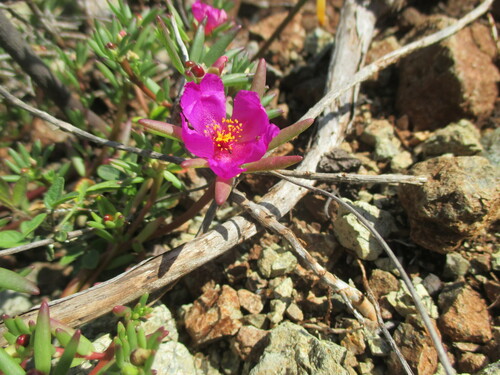
Cuban purslane
Portulaca biloba
Photo: iNaturalist: (c) Pedro A. González Gutiérrez, some rights reserved (CC BY-NC), uploaded by Pedro A. González Gutiérrez
Overview
Cuban purslane (Portulaca biloba) is a succulent herbaceous plant endemic to Cuba, characterized by its small, fleshy, bilobed leaves and tiny yellow flowers. This low-growing annual or perennial forms dense mats in coastal and rocky environments, serving as an important pioneer species that helps stabilize soil and provides habitat for small invertebrates.
Cuban purslane faces severe threats from habitat destruction due to coastal development, tourism infrastructure, and urban expansion along Cuba's coastlines. The species' extremely limited distribution makes it particularly vulnerable to localized disturbances, while invasive plant species compete for the same specialized coastal habitats.
Habitat
Cuban purslane inhabits rocky coastal cliffs, limestone outcrops, and sandy coastal flats along Cuba's shoreline. It thrives in areas with high salt exposure and well-drained soils, often growing in crevices and shallow depressions where organic matter accumulates.
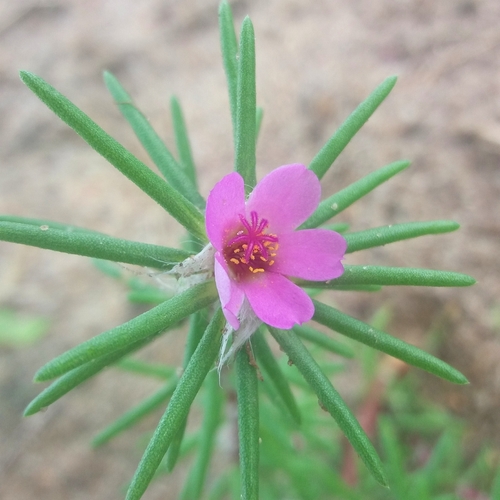
Other threatened species in Portulacaceae

Frequently asked questions
Why is Cuban purslane classified as Endangered?
Where does Cuban purslane live?
What are the main threats to Cuban purslane?
Get weekly conservation intelligence
One short digest a week of the most striking species and country data we ship, plus breaking conservation news paired with our database where it matters.
Free, no spam. One-click unsubscribe in every email.