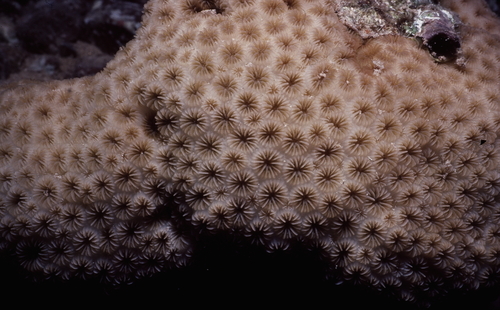
Leptastrea coral
Leptastrea aequalis
Photo: iNaturalist: (c) Tomas Cedhagen, some rights reserved (CC BY-NC), uploaded by Tomas Cedhagen
Overview
Leptastrea aequalis, commonly known as crust coral, is a small colonial hard coral that forms encrusting plates and low mounds on reef substrates. This species displays a distinctive appearance with small, closely-packed corallites that create a smooth, crusty surface texture across the colony. As a reef-building coral, it contributes to the structural complexity of coral reef ecosystems and provides habitat for numerous marine organisms.
Leptastrea aequalis faces significant threats from ocean warming and acidification, which cause coral bleaching and reduce calcification rates essential for skeletal growth. Coastal development, pollution, and destructive fishing practices further degrade reef habitats, while sedimentation from terrestrial runoff smothers coral colonies and reduces water quality.
Habitat
Shallow tropical coral reefs and reef flats in the Indo-Pacific region, typically found in clear waters at depths ranging from intertidal zones to approximately 20 meters. This species forms encrusting colonies on hard substrates including reef slopes, lagoons, and protected reef areas.
Threatened in Cocos (Keeling) Islands


Frequently asked questions
Why is Leptastrea coral classified as Vulnerable?
Where does Leptastrea coral live?
What are the main threats to Leptastrea coral?
Get weekly conservation intelligence
One short digest a week of the most striking species and country data we ship, plus breaking conservation news paired with our database where it matters.
Free, no spam. One-click unsubscribe in every email.