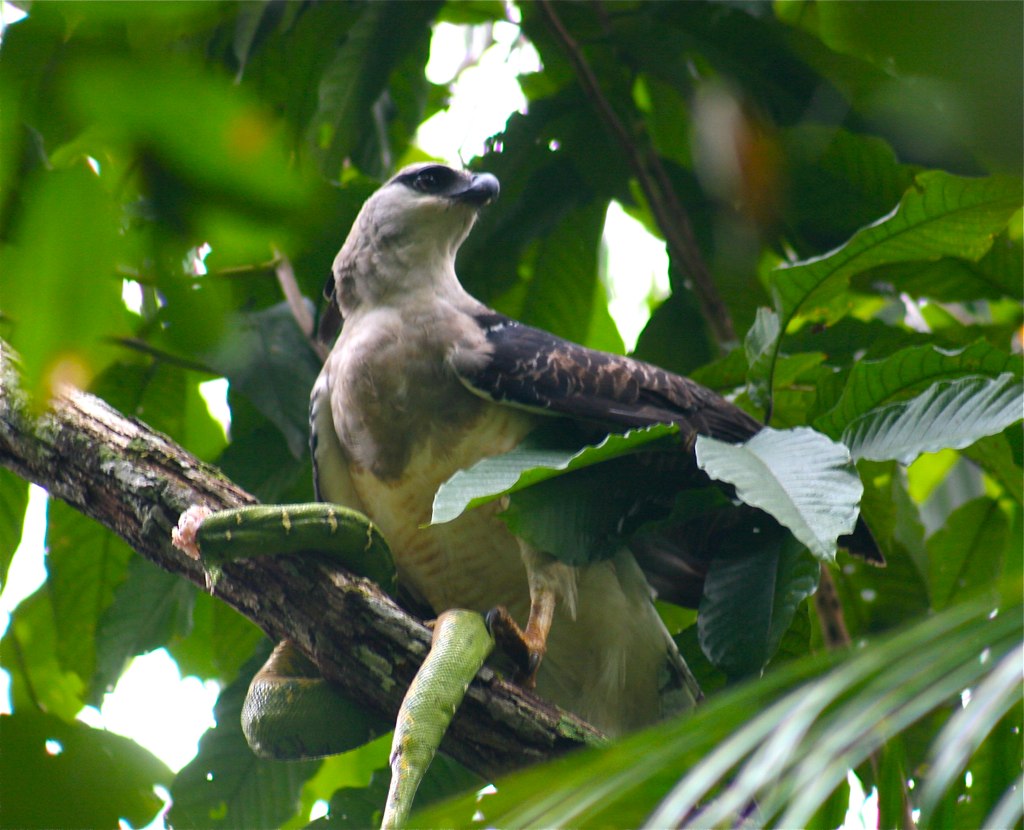
Crested Eagle
Morphnus guianensis
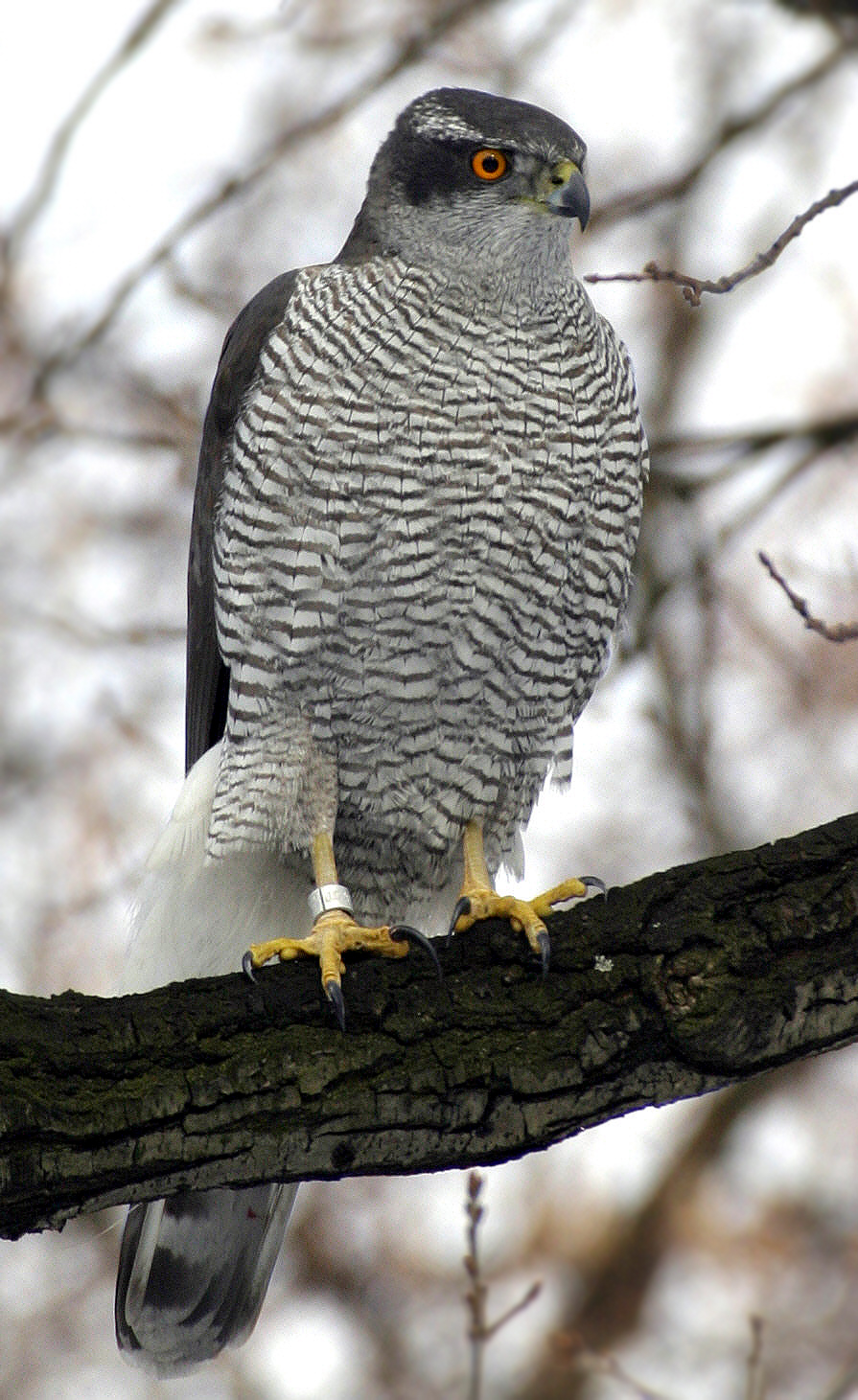
Photo: Wikimedia Commons (CC) via https://en.wikipedia.org/wiki/Crested_eagle
Overview
The Crested Eagle (Morphnus guianensis) is a magnificent raptor distinguished by its prominent feathered crest and powerful build. This large eagle measures 78-89 cm in length with a wingspan reaching 176 cm, displaying distinctive plumage that varies from dark brown to grayish phases. Adults exhibit striking yellow eyes, a robust hooked bill, and feathered legs extending to powerful talons adapted for capturing substantial prey.
The species inhabits primary and mature secondary tropical rainforests across Central and South America, from southern Mexico through the Amazon Basin to northern Argentina. These eagles prefer dense canopy environments where they hunt medium-sized mammals including sloths, monkeys, and opossums, as well as large birds and reptiles. Crested Eagles are solitary and territorial, with pairs maintaining large home ranges that can exceed 1,000 hectares.
They construct massive stick nests high in emergent trees, typically producing a single offspring every two to three years. The species is classified as Vulnerable by the IUCN due to ongoing habitat loss and fragmentation throughout its range. However, encouraging conservation developments include the establishment of large protected areas across the Amazon Basin and successful breeding programs in several countries.
Recent camera trap studies have documented stable populations in well-protected reserves, and the species shows remarkable adaptability to selectively logged forests when sufficient canopy cover remains. Indigenous territories across the Amazon continue to provide crucial habitat refuges for this impressive apex predator.
Crested Eagles face severe pressure from accelerating deforestation rates across the Amazon Basin and Central American forests, with large-scale cattle ranching and agricultural expansion eliminating vast areas of suitable habitat. The species' requirement for extensive territories and mature forest canopy makes it particularly vulnerable to habitat fragmentation, as isolated forest patches cannot support viable breeding populations. Additionally, the eagles' slow reproductive rate and late sexual maturity limit their ability to recover from population declines caused by direct persecution and accidental poisoning from livestock protection programs.
Habitat
Crested Eagles inhabit lowland tropical rainforests from sea level to 1,000 meters elevation, showing strong preference for primary forests with intact canopy structure. They require large territories of mature forest with emergent trees for nesting and dense understory vegetation that supports their diverse prey base of arboreal mammals.
Other threatened species in Accipitridae
Frequently asked questions
Why is Crested Eagle classified as Vulnerable?
Where does Crested Eagle live?
What are the main threats to Crested Eagle?
Get weekly conservation intelligence
One short digest a week of the most striking species and country data we ship, plus breaking conservation news paired with our database where it matters.
Free, no spam. One-click unsubscribe in every email.