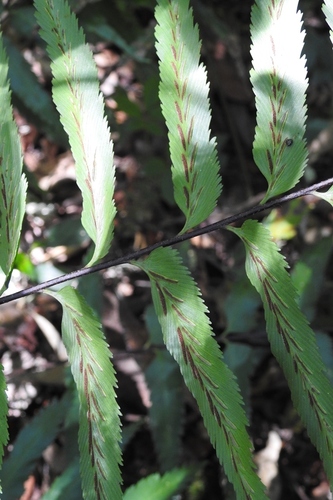
Creeping Spleenwort
Asplenium serra
Photo: iNaturalist: (c) Neptalí Ramírez Marcial, some rights reserved (CC BY), uploaded by Neptalí Ramírez Marcial
Overview
Creeping Spleenwort (Asplenium serra) is a small epiphytic fern characterized by its distinctive serrated fronds and creeping rhizomes that allow it to spread across tree bark and rock surfaces. This delicate fern produces narrow, lance-shaped fronds with deeply toothed margins that give it its common name. As an epiphyte, it plays an important ecological role in forest canopy ecosystems by contributing to biodiversity and providing microhabitats for small invertebrates.
Creeping Spleenwort faces severe population declines primarily due to habitat destruction from urban development and agricultural expansion in its limited range. The species is particularly vulnerable due to its restricted distribution and specific habitat requirements, making it highly susceptible to localized threats and environmental changes.
Habitat
Creeping Spleenwort inhabits the bark of mature trees in humid montane forests, typically growing on moss-covered trunks and branches in shaded understory conditions. It can also be found on moist, shaded rock faces and cliff crevices where consistent humidity levels are maintained.
Other threatened species in Aspleniaceae
Frequently asked questions
Why is Creeping Spleenwort classified as Endangered?
Where does Creeping Spleenwort live?
What are the main threats to Creeping Spleenwort?
Get weekly conservation intelligence
One short digest a week of the most striking species and country data we ship, plus breaking conservation news paired with our database where it matters.
Free, no spam. One-click unsubscribe in every email.