
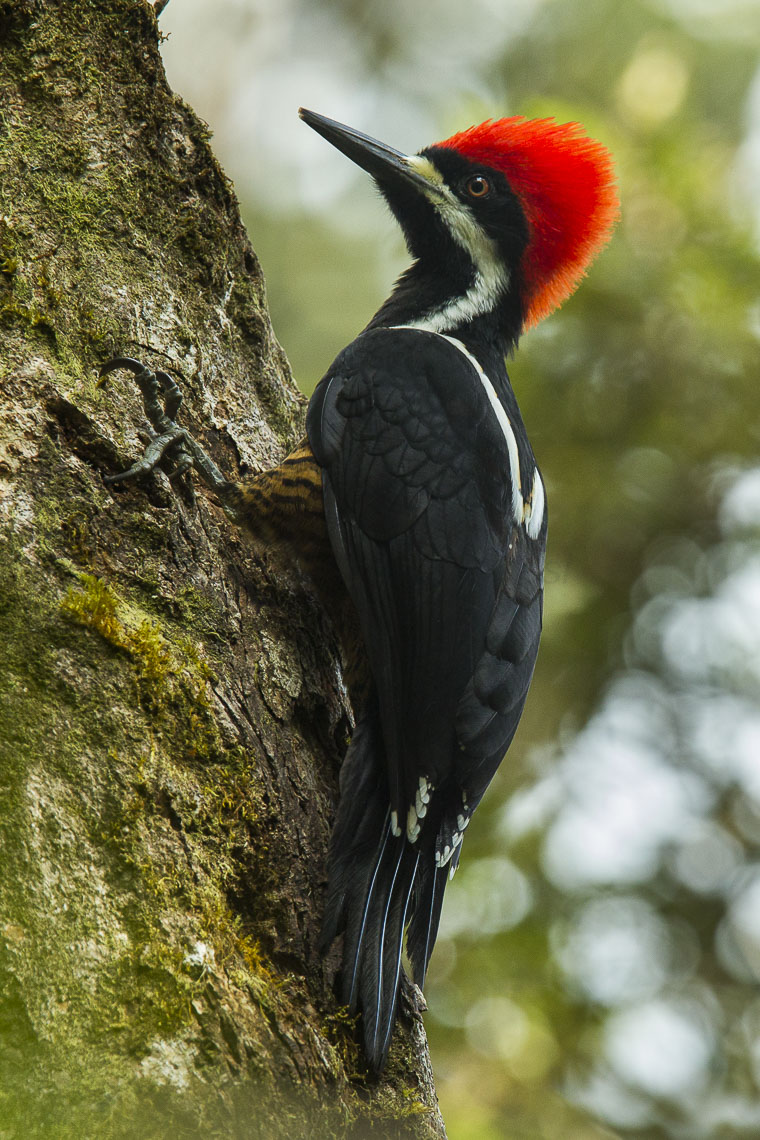
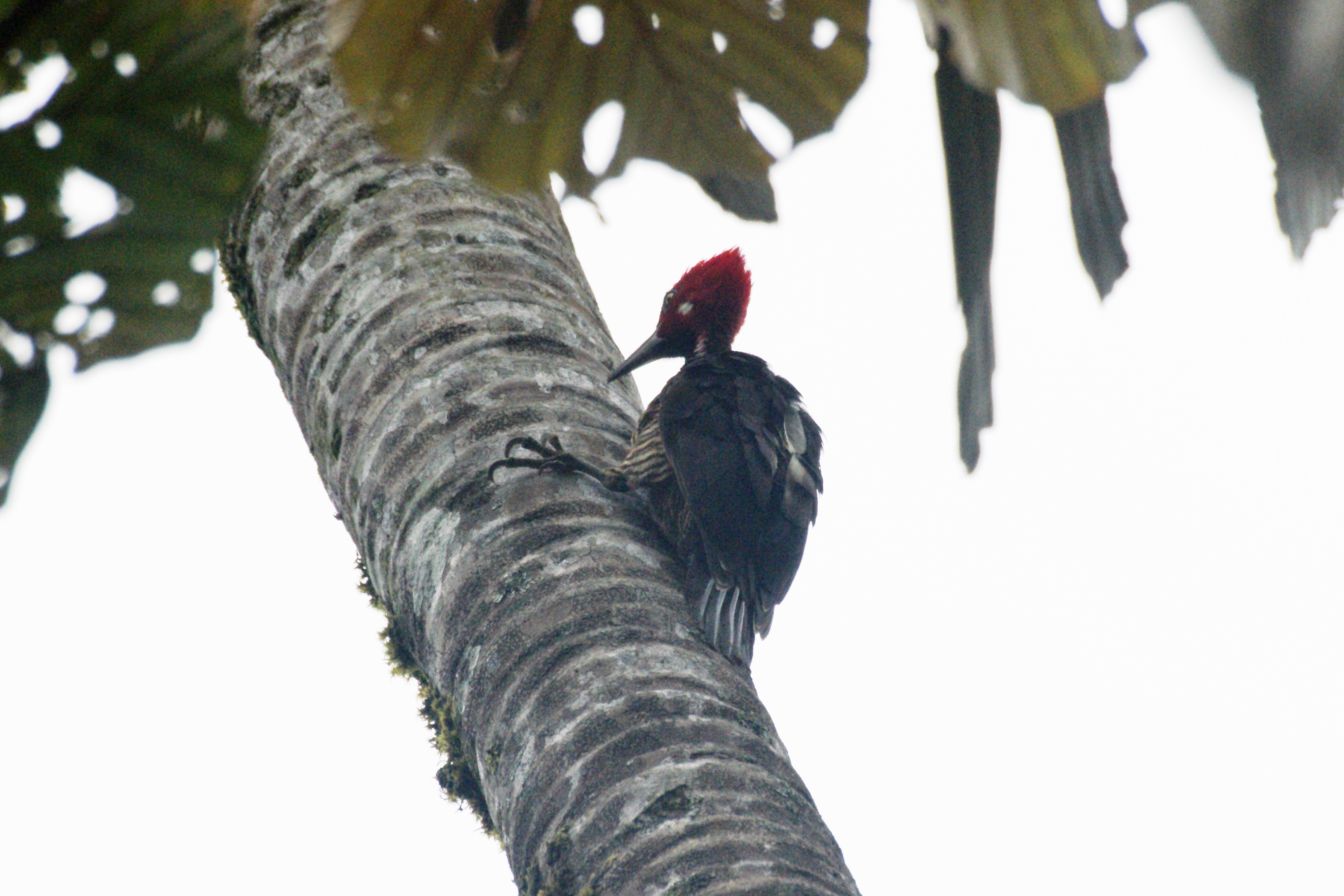
Cream-backed Woodpecker
Campephilus leucopogon
Photo: Wikimedia Commons (CC) via https://en.wikipedia.org/wiki/Cream-backed_woodpecker
Overview
The cream-backed woodpecker is a species of bird in subfamily Picinae of the woodpecker family Picidae. It is found in Argentina, Bolivia, Brazil, Paraguay and Uruguay.
The Cream-backed Woodpecker faces significant pressure from widespread deforestation and habitat fragmentation across its South American range. Large-scale agricultural expansion, logging operations, and infrastructure development continue to reduce and fragment the mature forest habitats this species requires for nesting and foraging.
Habitat
Primary and secondary humid forests, including tropical rainforests and montane forests, typically in areas with abundant large trees and dead wood for excavating nest cavities. The species occurs from lowlands up to approximately 1,500 meters elevation across parts of South America.
Other threatened species in Picidae


Frequently asked questions
Why is Cream-backed Woodpecker classified as Vulnerable?
Where does Cream-backed Woodpecker live?
What are the main threats to Cream-backed Woodpecker?
Get weekly conservation intelligence
One short digest a week of the most striking species and country data we ship, plus breaking conservation news paired with our database where it matters.
Free, no spam. One-click unsubscribe in every email.