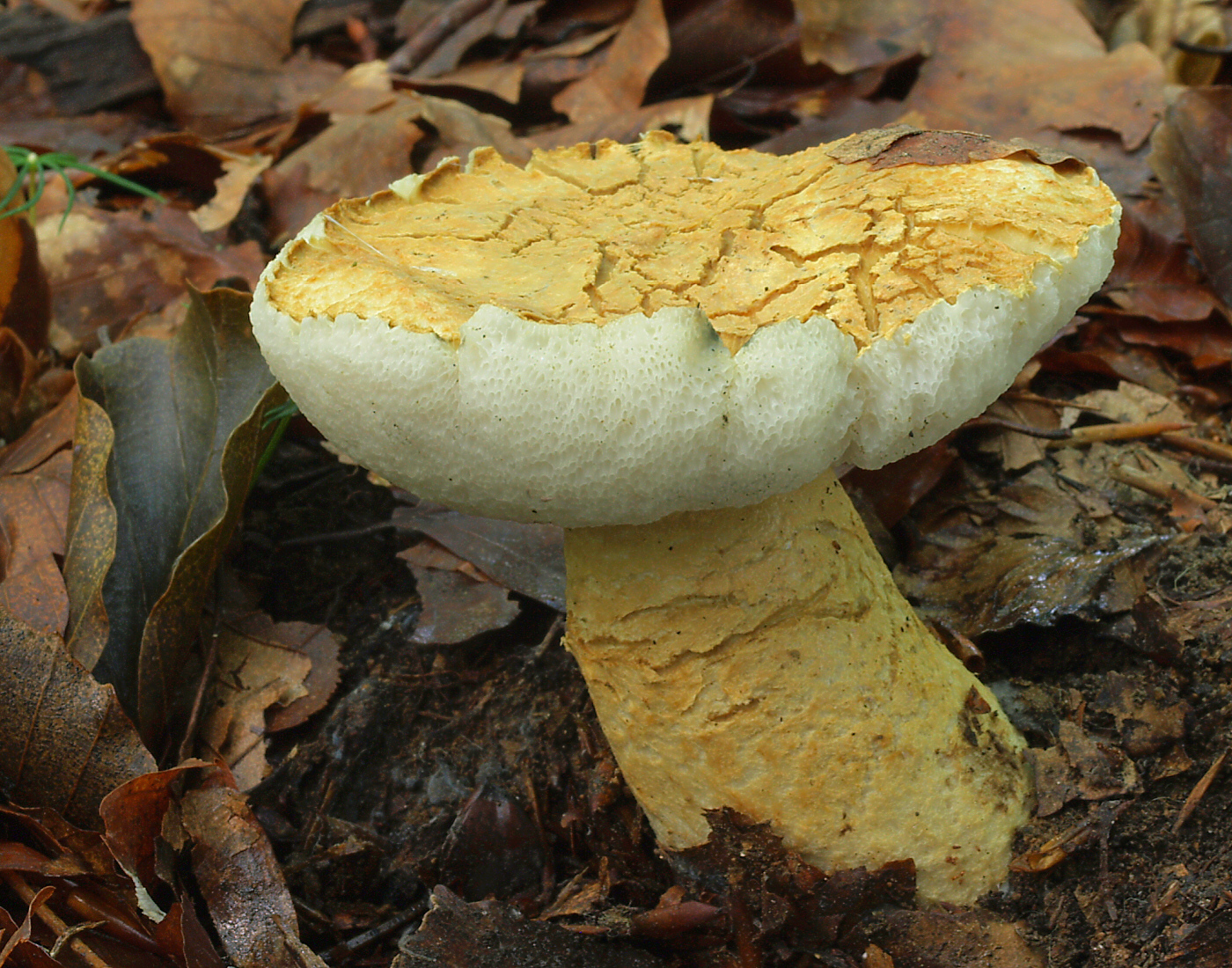
Cornflower Bolete
Gyroporus cyanescens
Photo: Wikimedia Commons (CC) via https://en.wikipedia.org/wiki/Gyroporus_cyanescens
Overview
Gyroporus cyanescens, commonly known as the bluing bolete or the cornflower bolete, is a species of bolete fungus in the family Gyroporaceae. First described from France in 1788, the species is found in Eurasia, Australia, and eastern North America, where it grows on the ground in coniferous and mixed forests.
The Cornflower Bolete faces significant threats from habitat loss due to deforestation and forest fragmentation, which reduces the availability of suitable host trees essential for its mycorrhizal relationships. Climate change poses additional risks by altering forest composition and moisture regimes that this species depends upon. Pollution and soil contamination from agricultural and industrial activities further compromise the delicate soil chemistry required for healthy fungal communities.
Habitat
Deciduous and mixed forests, particularly those dominated by oak, beech, and other hardwood species where it forms mycorrhizal associations with tree roots. Typically found in mature forest soils with rich organic matter and stable moisture conditions.
Frequently asked questions
Why is Cornflower Bolete classified as Vulnerable?
Where does Cornflower Bolete live?
What are the main threats to Cornflower Bolete?
Get weekly conservation intelligence
One short digest a week of the most striking species and country data we ship, plus breaking conservation news paired with our database where it matters.
Free, no spam. One-click unsubscribe in every email.