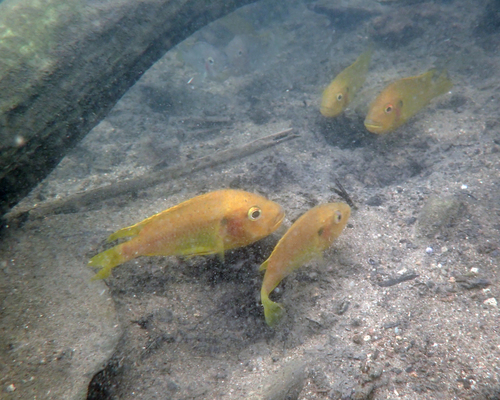
Coptodon imbrifernus
Photo: (c) Christopher Martin, some rights reserved (CC BY-NC), uploaded by Christopher Martin
Overview
Coptodon imbrifernus is a small cichlid fish belonging to the Coptodon genus, a group of tilapiine cichlids known for their laterally compressed bodies, deep profiles, and adaptations to specific freshwater niches within the African Rift Valley lake systems and associated crater lakes. This species is endemic to a highly restricted range, typically a single lake or a small cluster of connected water bodies, where it has evolved in isolation over thousands of years. Like many crater lake cichlids, it likely displays distinctive coloration patterns used in territorial and breeding displays, along with specialized feeding structures suited to the algae, plankton, or invertebrates available in its confined habitat.
The species is classified as Critically Endangered (CR) by the IUCN, reflecting the severe vulnerability that comes with such a narrow geographic distribution. Its population trend is currently unknown, though the extremely limited extent of occurrence means any environmental disturbance carries outsized risk for the species' survival. Primary concerns for crater lake cichlids of this type include water quality degradation, competition and predation from introduced fish species, and the compounding effects of a single-lake distribution that leaves no possibility of natural recolonization if local extinction occurs.
Conservation attention for restricted-range African cichlids has increased in recent years, with regional monitoring programs and lake ecosystem assessments helping to identify populations at risk before declines become irreversible. Some crater lakes hosting similar endemic cichlids have seen local community engagement in watershed protection, offering a hopeful model that could benefit this species if extended to its habitat. Continued taxonomic and ecological research is essential to clarify population size, trends, and the specific pressures acting on Coptodon imbrifernus, and such efforts represent a genuinely promising avenue for securing its long-term survival.
Coptodon imbrifernus faces severe threats from habitat degradation and water pollution in its restricted range within the Lake Victoria basin. The species has experienced dramatic population declines due to eutrophication from agricultural runoff and sewage discharge, which has altered water chemistry and reduced oxygen levels. Introduction of non-native fish species has created additional competitive pressure and predation risks. Dam construction and water extraction for irrigation have further modified the aquatic ecosystems this cichlid depends upon.
Habitat
This cichlid inhabits shallow, vegetated areas of freshwater lakes and associated wetlands within the Lake Victoria drainage system. The species prefers areas with rocky substrates and aquatic vegetation where it can forage and seek shelter.
Other threatened species in CICHLIDAE

Threatened in Cameroon

Frequently asked questions
Why is Coptodon imbrifernus classified as Critically Endangered?
Where does Coptodon imbrifernus live?
What are the main threats to Coptodon imbrifernus?
Get weekly conservation intelligence
One short digest a week of the most striking species and country data we ship, plus breaking conservation news paired with our database where it matters.
Free, no spam. One-click unsubscribe in every email.