Cophixalus timidus
Overview
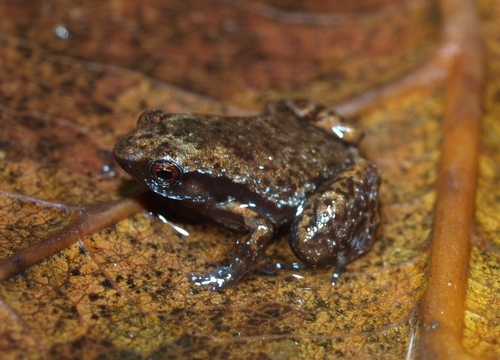
Cophixalus timidus is a small frog species endemic to the rainforests of northeastern Queensland, Australia. This microhylid frog belongs to a genus of diminutive frogs that typically inhabit leaf litter and low vegetation in tropical rainforest environments. The species has an extremely restricted distribution range, making it particularly vulnerable to environmental changes and habitat disturbance.
Like other members of its genus, C. timidus likely has direct development, with eggs developing directly into small frogs without a free-swimming tadpole stage. The species faces significant threats from habitat loss and fragmentation due to land clearing, agricultural expansion, and urban development in the region.
Climate change poses additional risks, as rising temperatures and altered precipitation patterns can affect the moist microhabitats essential for the species' survival. The fragmented nature of remaining suitable habitat limits population connectivity and genetic exchange. Conservation efforts for this critically endangered species focus on habitat protection and restoration within its known range.
Research is ongoing to better understand the species' ecology, population status, and specific habitat requirements. Protection of remaining rainforest fragments and establishment of wildlife corridors are considered essential for the species' long-term survival. The species serves as an indicator of rainforest ecosystem health in the region.
Cophixalus timidus faces severe threats from habitat loss and fragmentation caused by land clearing, agricultural development, and urbanization in northeastern Queensland. Climate change compounds these pressures by altering temperature and moisture conditions in the specialized microhabitats this species requires. The extremely restricted range makes the species particularly vulnerable to any form of habitat disturbance.
Habitat
This species inhabits tropical rainforests in northeastern Queensland, Australia, where it occupies leaf litter and low vegetation layers. It requires moist microhabitats within these rainforest environments for survival and reproduction.
Conservation measures underway
Other threatened species in MICROHYLIDAE
Threatened in Papua New Guinea
Frequently asked questions
Why is Cophixalus timidus classified as Critically Endangered?
Where does Cophixalus timidus live?
What are the main threats to Cophixalus timidus?
Get weekly conservation intelligence
One short digest a week of the most striking species and country data we ship, plus breaking conservation news paired with our database where it matters.
Free, no spam. One-click unsubscribe in every email.