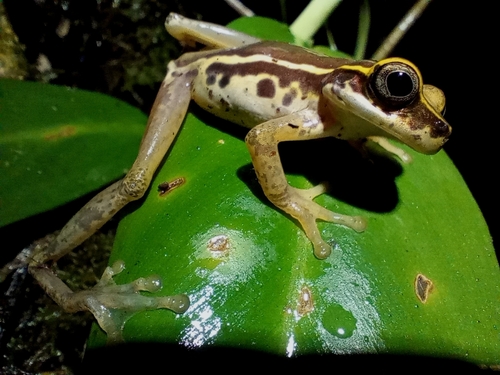
Continental Divide Treefrog
Isthmohyla graceae
Photo: Photo: (c) Edgar Abel Toribio Pèrez, all rights reserved, uploaded by Edgar Abel Toribio Pèrez
Overview
The Continental Divide tree frog is a species of frog in the family Hylidae found in Panama and possibly Costa Rica. Its natural habitats are subtropical or tropical moist montane forests, rivers, freshwater marshes, and intermittent freshwater marshes. It is threatened by habitat loss.
Isthmohyla graceae faces severe population decline primarily due to the devastating chytrid fungus (Batrachochytrium dendrobatidis) that has decimated amphibian populations across Central America. Habitat destruction from agricultural expansion and urban development in Costa Rica's montane forests has further reduced available breeding sites. Climate change is altering the cool, moist conditions this species requires, with rising temperatures and changing precipitation patterns affecting both the frogs and their fungal pathogen dynamics.
Habitat
This species inhabits cool, humid montane forests of Costa Rica, typically found near streams and in vegetation along waterways at elevations between 1,200-2,000 meters. It requires pristine forest conditions with stable moisture levels and clean water sources for breeding.
Conservation measures underway
Other threatened species in HYLIDAE
Threatened in Costa Rica
Frequently asked questions
Why is Continental Divide Treefrog classified as Critically Endangered?
Where does Continental Divide Treefrog live?
What are the main threats to Continental Divide Treefrog?
Get weekly conservation intelligence
One short digest a week of the most striking species and country data we ship, plus breaking conservation news paired with our database where it matters.
Free, no spam. One-click unsubscribe in every email.