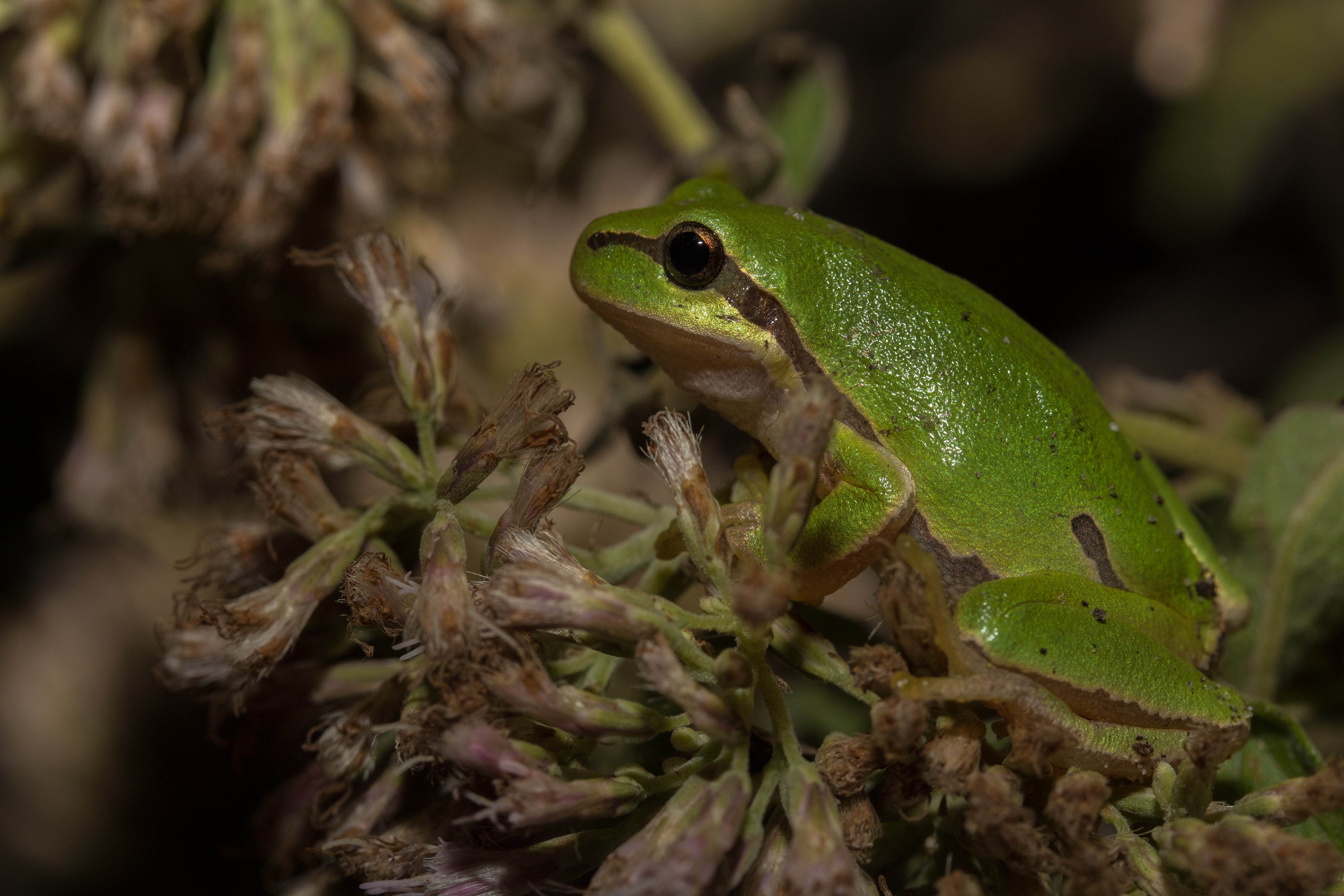
Common Tree Frog
Hyla arborea
The European tree frog is a small tree frog. As traditionally defined, it was found throughout much of Europe, Asia and northern Africa, but based on molecular genetic and other data several populations formerly included in it are now recognized as separate species, limiting the true European tree frog to Europe from France to Poland and Greece.
Photo: Wikimedia Commons (CC) via https://en.wikipedia.org/wiki/European_tree_frog
Taxonomy & Classification
Kingdom
Animalia
Phylum
Chordata
Class
Amphibia
Order
Anura
Family
Hylidae
Genus
Hyla
Common Tree Frog belongs to the family Hylidae, order Anura, within the Amphibia class.
Species Profile
The European tree frog is a small tree frog. As traditionally defined, it was found throughout much of Europe, Asia and northern Africa, but based on molecular genetic and other data several populations formerly included in it are now recognized as separate species, limiting the true European tree frog to Europe from France to Poland and Greece.
The Common Tree Frog faces severe population declines across its European range due to widespread habitat destruction and degradation of wetland breeding sites. Agricultural intensification, urbanization, and pollution have eliminated or compromised many of the small ponds, ditches, and temporary water bodies essential for reproduction.
Key Facts
Habitat & Distribution
Members of the H. arborea species complex are the only representatives of the widespread tree frog family (Hylidae) indigenous to mainland Europe. northwest Africa, and temperate Asia to Japan. European tree frogs can be found in marshlands, damp meadows, reed beds, parks, gardens, vineyards, orchards, stream banks, lake shores, or humid or dry forests. They tend to avoid dark or thick forests,...
Threats
IUCN Red List: Endangered
The Common Tree Frog faces severe population declines across its European range due to widespread habitat destruction and degradation of wetland breeding sites. Agricultural intensification, urbanization, and pollution have eliminated or compromised many of the small ponds, ditches, and temporary water bodies essential for reproduction.
Destruction of breeding ponds and wetlands
Habitat loss and fragmentation from agricultural intensification
Water pollution from pesticides and fertilizers
Climate change affecting breeding cycles
Urbanization and infrastructure development
National vs Global Threat Status
How this species is assessed at the national level compared to its IUCN global status (EN).
| Country | National Status | Global Status | Comparison |
|---|---|---|---|
| EU | LCLeast Concern | ENEndangered | Lower local risk |
National Red List data sourced from the National Red List Project (nationalredlist.org, ZSL) and country-specific Red List authorities.
Community Sightings
Report a sightingNo community sightings yet. Be the first to report!
Sources & Attribution
How to Cite
IUCN: IUCN (2025). The IUCN Red List of Threatened Species. Version 2025-1. Available at: https://www.iucnredlist.org. doi:10.2305/IUCN.UK.2025-1.RLTS
GBIF: GBIF.org (2025). GBIF Home Page. Available at: https://www.gbif.org
National Red Lists: ZSL (2025). National Red List. Zoological Society of London. Available at: https://www.nationalredlist.org
This page: SpeciesRadar (2025). Common Tree Frog (Hyla arborea). SpeciesRadar: Intelligence for Earth's Biodiversity. Available at: https://speciesradar.org/species/common-tree-frog