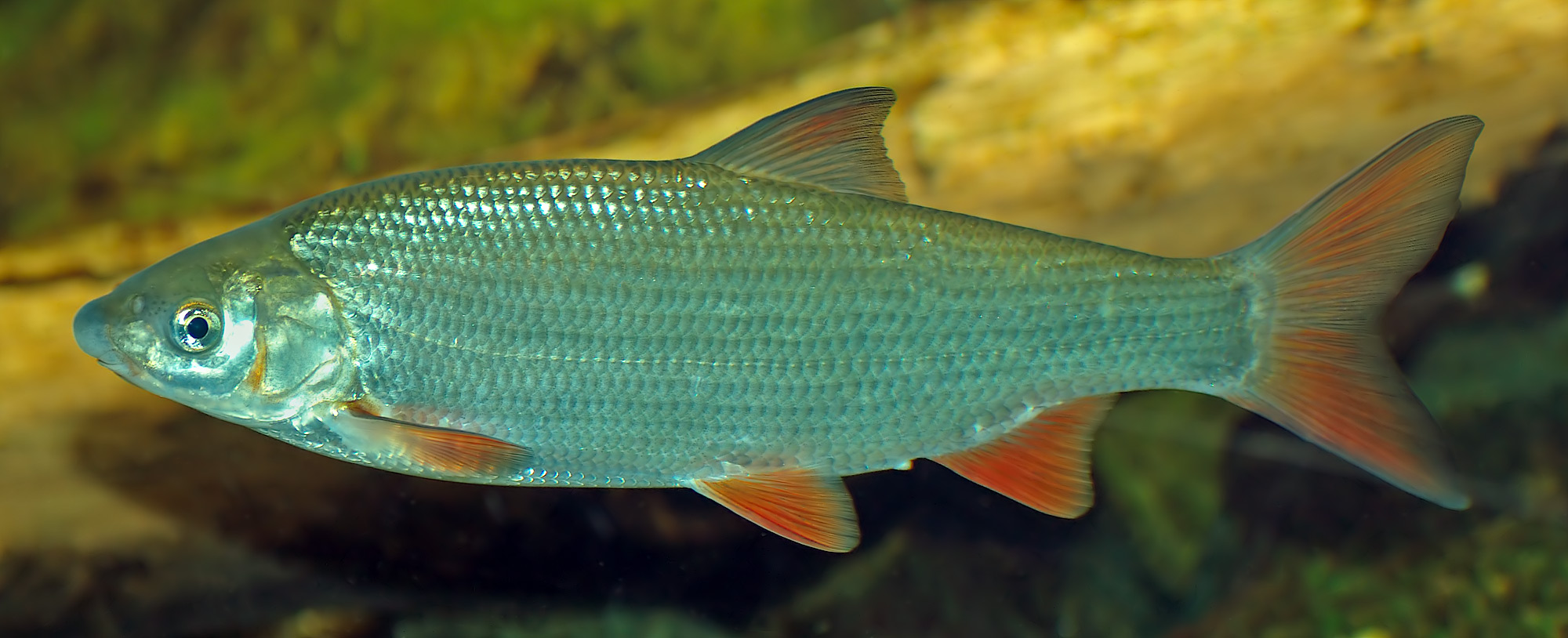
Common nase
Chondrostoma nasus
The common nase is a European potamodromous cyprinid fish. It is often simply called the nase, but that can refer to any species of its genus Chondrostoma.
30
Countries
Photo: Wikimedia Commons (CC) via https://en.wikipedia.org/wiki/Common_nase
Taxonomy & Classification
Kingdom
Animalia
Phylum
Chordata
Order
Cypriniformes
Family
Cyprinidae
Genus
Chondrostoma
Common nase belongs to the family Cyprinidae, order Cypriniformes, within the unknown class.
Species Profile
The common nase is a European potamodromous cyprinid fish. It is often simply called the nase, but that can refer to any species of its genus Chondrostoma. Another name is sneep.
The Common nase faces severe population declines primarily due to habitat degradation and fragmentation of European river systems. Dam construction, river channelization, and water pollution have significantly reduced suitable spawning and feeding habitats, while overfishing has further pressured remaining populations.
Key Facts
Habitat & Distribution
The nase is found naturally in drainages of the Black Sea (Danube, Dniestr, Southern Bug, Dniepr), the southern Baltic Sea (Nieman, Odra, Vistula) and the southern North Sea (to Meuse in the west). Moreover, it has been introduced to the Rhône, Loire, Hérault, and Soca/Isonzo (Italy, Slovenia) drainages. It is a migratory fish. The fish is most important food source for a Danube salmon (Huchen).
Threats
IUCN Red List: Endangered
The Common nase faces severe population declines primarily due to habitat degradation and fragmentation of European river systems. Dam construction, river channelization, and water pollution have significantly reduced suitable spawning and feeding habitats, while overfishing has further pressured remaining populations.
Dam construction and river fragmentation
River channelization and habitat modification
Water pollution from agricultural and industrial sources
Climate change affecting water temperature and flow regimes
Overfishing and exploitation
Found in 30 Countries
National vs Global Threat Status
How this species is assessed at the national level compared to its IUCN global status (EN).
| Country | National Status | Global Status | Comparison |
|---|---|---|---|
| EU | LCLeast Concern | ENEndangered | Lower local risk |
| EU | LCLeast Concern | ENEndangered | Lower local risk |
National Red List data sourced from the National Red List Project (nationalredlist.org, ZSL) and country-specific Red List authorities.
Community Sightings
Report a sightingNo community sightings yet. Be the first to report!
Sources & Attribution
How to Cite
IUCN: IUCN (2025). The IUCN Red List of Threatened Species. Version 2025-1. Available at: https://www.iucnredlist.org. doi:10.2305/IUCN.UK.2025-1.RLTS
GBIF: GBIF.org (2025). GBIF Home Page. Available at: https://www.gbif.org
National Red Lists: ZSL (2025). National Red List. Zoological Society of London. Available at: https://www.nationalredlist.org
This page: SpeciesRadar (2025). Common nase (Chondrostoma nasus). SpeciesRadar: Intelligence for Earth's Biodiversity. Available at: https://speciesradar.org/species/common-nase