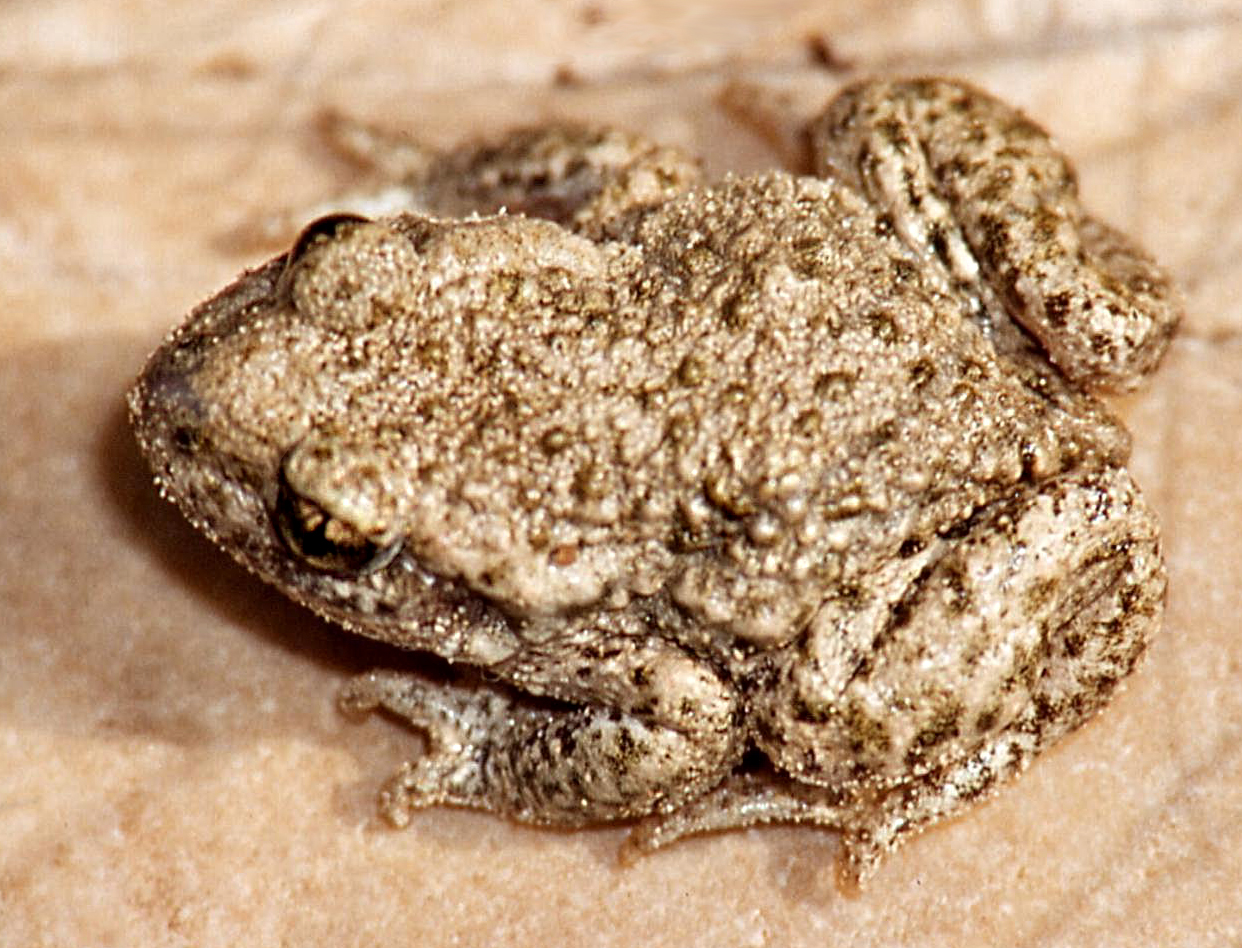
Common Midwife Toad
Alytes obstetricans
The common midwife toad is a species of midwife frog in the family Alytidae. It is found in Belgium, France, Germany, Luxembourg, the Netherlands, Portugal, Spain, Switzerland, and the United Kingdom.
Photo: Wikimedia Commons (CC) via https://en.wikipedia.org/wiki/Common_midwife_toad
Taxonomy & Classification
Kingdom
Animalia
Phylum
Chordata
Class
Amphibia
Order
Anura
Family
Alytidae
Genus
Alytes
Common Midwife Toad belongs to the family Alytidae, order Anura, within the Amphibia class.
Species Profile
The common midwife toad is a species of midwife frog in the family Alytidae. It is found in Belgium, France, Germany, Luxembourg, the Netherlands, Portugal, Spain, Switzerland, and the United Kingdom. Like other members of its genus (Alytes), the male toad carries the eggs around entwined on his back and thighs until they are ready to hatch.
The Common Midwife Toad faces severe population declines primarily due to the devastating chytrid fungal disease (Batrachochytrium dendrobatidis), which has caused mass mortality events across its range. Additional pressures from habitat loss, pollution, and climate change have further compromised remaining populations, making this once-common species increasingly vulnerable to extinction.
Key Facts
Habitat & Distribution
The common midwife toad is found in a number of countries in north west Europe. It is common throughout France and is also found in southern Belgium and the Netherlands, Luxembourg, western Germany and northern and western Switzerland. There are some disconnected outlying populations in Portugal and northern Spain. In the Pyrenees it is found at altitudes of up to . Researchers have noted a...
Threats
IUCN Red List: Endangered
The Common Midwife Toad faces severe population declines primarily due to the devastating chytrid fungal disease (Batrachochytrium dendrobatidis), which has caused mass mortality events across its range. Additional pressures from habitat loss, pollution, and climate change have further compromised remaining populations, making this once-common species increasingly vulnerable to extinction.
Chytrid fungal disease (Batrachochytrium dendrobatidis)
Habitat loss and fragmentation from urbanization and agriculture
Climate change affecting moisture levels and breeding conditions
Introduction of non-native fish species in breeding ponds
Water pollution and contamination of breeding sites
National vs Global Threat Status
How this species is assessed at the national level compared to its IUCN global status (EN).
| Country | National Status | Global Status | Comparison |
|---|---|---|---|
| EU | LCLeast Concern | ENEndangered | Lower local risk |
National Red List data sourced from the National Red List Project (nationalredlist.org, ZSL) and country-specific Red List authorities.
Community Sightings
Report a sightingNo community sightings yet. Be the first to report!
Sources & Attribution
How to Cite
IUCN: IUCN (2025). The IUCN Red List of Threatened Species. Version 2025-1. Available at: https://www.iucnredlist.org. doi:10.2305/IUCN.UK.2025-1.RLTS
GBIF: GBIF.org (2025). GBIF Home Page. Available at: https://www.gbif.org
National Red Lists: ZSL (2025). National Red List. Zoological Society of London. Available at: https://www.nationalredlist.org
This page: SpeciesRadar (2025). Common Midwife Toad (Alytes obstetricans). SpeciesRadar: Intelligence for Earth's Biodiversity. Available at: https://speciesradar.org/species/common-midwife-toad