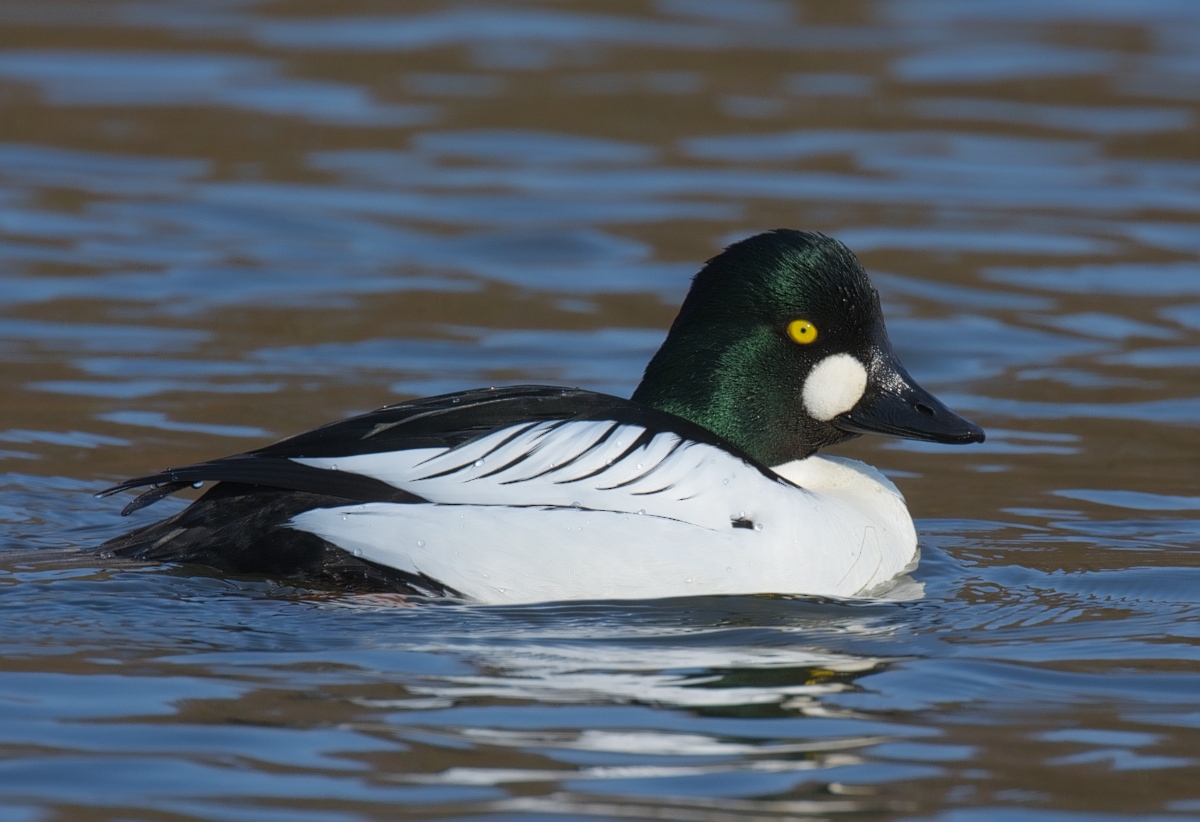
Butterball
Bucephala clangula
Photo: Wikimedia Commons (CC) via https://en.wikipedia.org/wiki/Common_goldeneye
Overview
The common goldeneye or simply goldeneye is a medium-sized sea duck of the genus Bucephala, the goldeneyes. Its closest relative is the similar Barrow's goldeneye. The genus name is derived from the Ancient Greek boukephalos, a reference to the bulbous head shape of the bufflehead. The species name is derived from the Latin clangere.
The common goldeneye faces significant pressure from habitat loss due to wetland drainage, dam construction, and deforestation of boreal forests containing suitable nesting cavities. Climate change is altering the timing of ice-free periods and affecting prey availability, while pollution from agricultural runoff and industrial activities degrades water quality in critical breeding and wintering areas.
Habitat
Boreal and temperate lakes, rivers, and coastal waters, requiring mature forests with tree cavities for nesting near freshwater bodies. During winter, the species utilizes sheltered coastal bays, estuaries, and ice-free inland waters with abundant aquatic invertebrates and small fish.
Other threatened species in Anatidae


Frequently asked questions
Why is Butterball classified as Vulnerable?
Where does Butterball live?
What are the main threats to Butterball?
Get weekly conservation intelligence
One short digest a week of the most striking species and country data we ship, plus breaking conservation news paired with our database where it matters.
Free, no spam. One-click unsubscribe in every email.