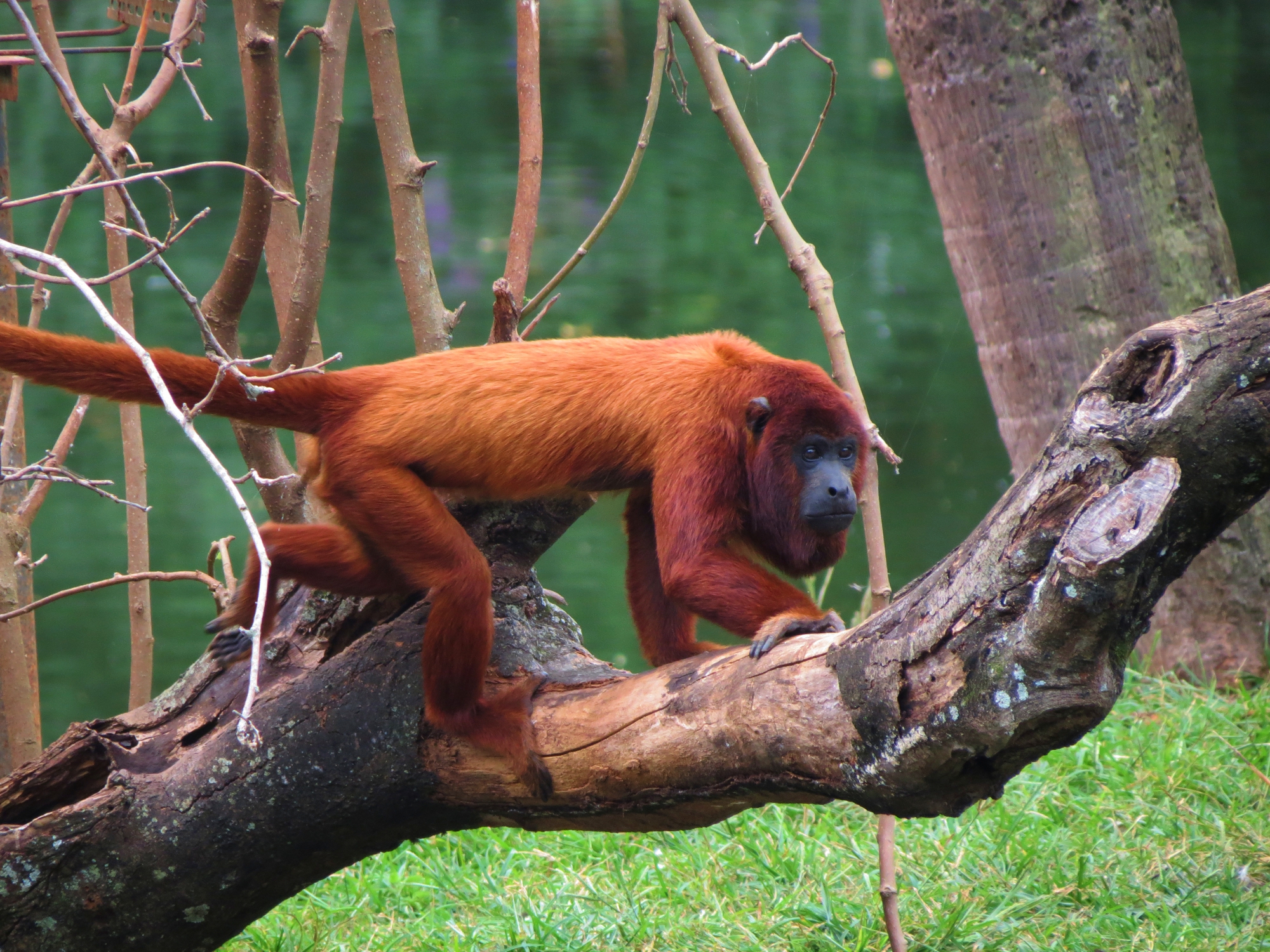
Colombian Red Howler
Alouatta seniculus
Photo: Wikimedia Commons (CC) via https://en.wikipedia.org/wiki/Colombian_red_howler
Overview
The Colombian red howler or Venezuelan red howler is a South American species of howler monkey, a type of New World monkey, found in the western Amazon Basin in Venezuela, Colombia, Ecuador, Peru and Brazil. The population in the Santa Cruz Department in Bolivia was split off as a separate species, the Bolivian red howler, in 1986, and more recently, splitting off the population in northeastern South America and Trinidad as the Guyanan red howler has occurred. All howler monkeys belong to the family Atelidae and the infraorder Platyrrhini.
The Colombian Red Howler faces severe population declines primarily due to extensive deforestation and habitat fragmentation across its range in South America. Agricultural expansion, cattle ranching, logging, and human settlement development have dramatically reduced and isolated forest patches, making populations vulnerable to local extinctions.
Habitat
Frequently asked questions
Why is Colombian Red Howler classified as Endangered?
Where does Colombian Red Howler live?
What are the main threats to Colombian Red Howler?
Get weekly conservation intelligence
One short digest a week of the most striking species and country data we ship, plus breaking conservation news paired with our database where it matters.
Free, no spam. One-click unsubscribe in every email.