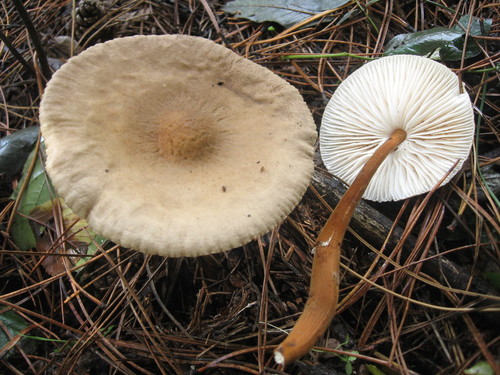
Xerula pudens
Photo: iNaturalist: (c) mycohollic, some rights reserved (CC BY-NC), uploaded by mycohollic
Overview
Xerula pudens is a distinctive mushroom species characterized by its smooth cap surface and notably elongated stem, earning it the common name 'long-stemmed collybia.' This saprotrophic fungus plays a crucial ecological role in forest ecosystems by decomposing organic matter and recycling nutrients back into the soil. The species typically produces pale-colored fruiting bodies with caps that can reach several centimeters in diameter.
Xerula pudens faces significant threats from habitat loss and degradation due to deforestation and forest fragmentation across its range. As a specialized saprobic fungus dependent on specific deadwood substrates in mature forest ecosystems, it is particularly vulnerable to logging activities and forest management practices that remove decaying wood. Climate change may also be altering the moisture and temperature conditions necessary for its fruiting and spore dispersal.
Habitat
This species occurs in mature deciduous and mixed forests, particularly beech and oak woodlands, where it grows as a saprobe on buried or partially buried deadwood and root systems. It typically fruits in moist, shaded forest floors with rich organic matter and stable microclimate conditions.
Other threatened species in Physalacriaceae


Frequently asked questions
Why is Xerula pudens classified as Vulnerable?
Where does Xerula pudens live?
What are the main threats to Xerula pudens?
Get weekly conservation intelligence
One short digest a week of the most striking species and country data we ship, plus breaking conservation news paired with our database where it matters.
Free, no spam. One-click unsubscribe in every email.