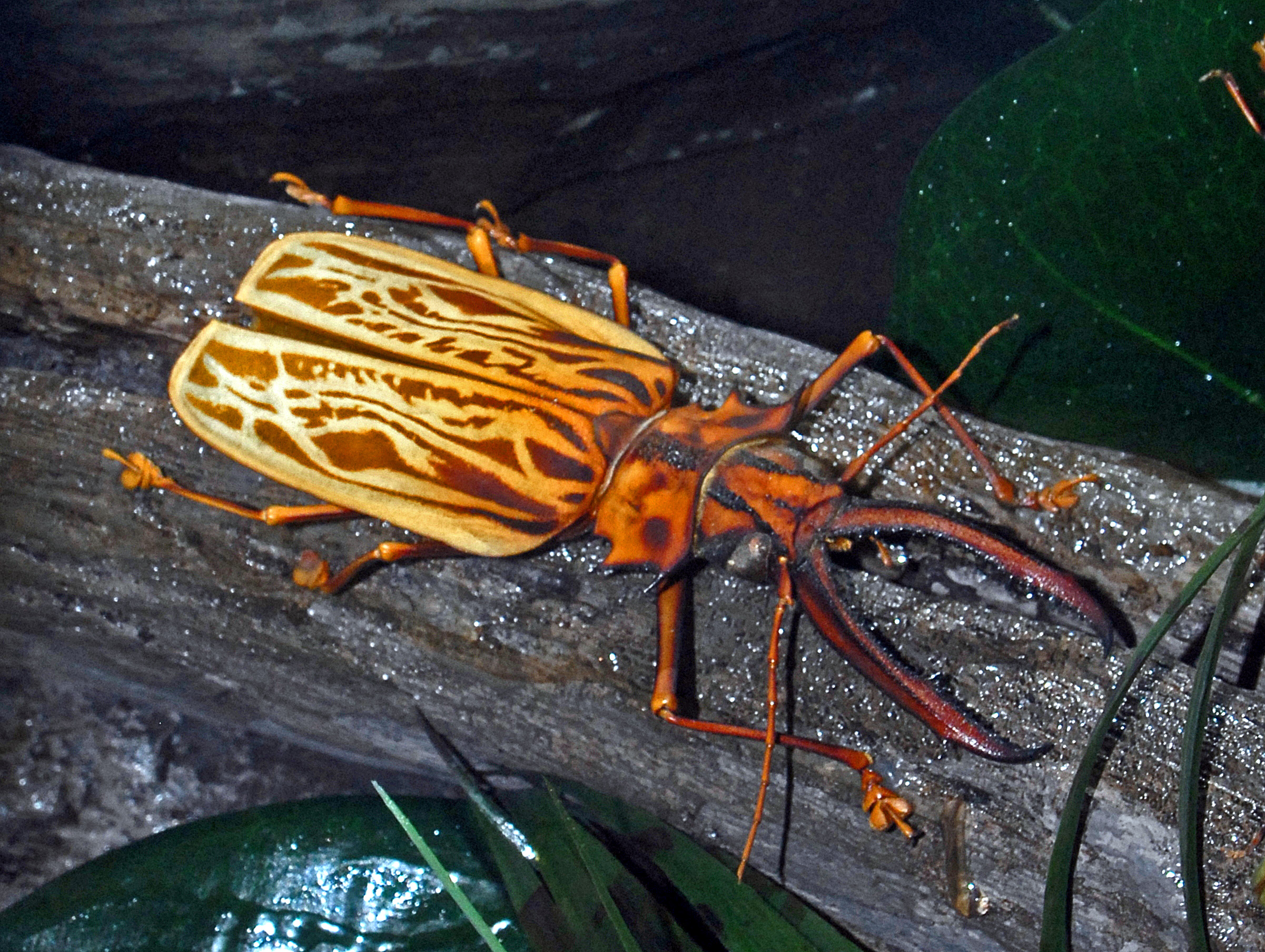
Clytus paradisiacus
Overview
A detailed profile for this species is sourced from the IUCN Red List of Threatened Species as assessments become available.
Clytus paradisiacus faces severe pressure from deforestation and habitat fragmentation across its limited range in Southeast Asian tropical forests. The species' dependence on specific host tree species makes it particularly vulnerable to selective logging practices that target these trees. Agricultural expansion and palm oil plantations have eliminated substantial portions of suitable habitat, while the beetle's slow reproductive cycle hampers population recovery in degraded areas.
Habitat
This longhorn beetle inhabits primary and secondary tropical rainforests in Southeast Asia, where it depends on specific hardwood tree species as larval hosts. The species requires mature forest stands with adequate canopy cover and is particularly associated with dipterocarp forests at elevations between 200-800 meters.
Other threatened species in CERAMBYCIDAE
Threatened in Greece
Frequently asked questions
Why is Clytus paradisiacus classified as Vulnerable?
Where does Clytus paradisiacus live?
What are the main threats to Clytus paradisiacus?
Get weekly conservation intelligence
One short digest a week of the most striking species and country data we ship, plus breaking conservation news paired with our database where it matters.
Free, no spam. One-click unsubscribe in every email.