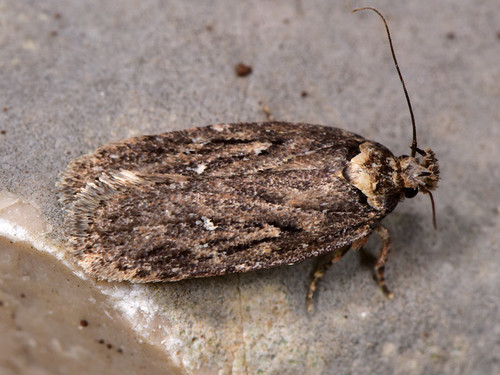
Carrot Flat-body
Depressaria douglasella
Photo: iNaturalist: (c) Paolo Mazzei, some rights reserved (CC BY-NC), uploaded by Paolo Mazzei
Overview
Depressaria douglasella is a moth of the family Depressariidae. It is found in most of Europe.
The Carrot Flat-body faces significant threats from habitat loss due to agricultural intensification and urban development, which reduces the availability of its host plants in the carrot family. Climate change poses additional risks by altering the distribution and phenology of both the moth and its food sources, potentially disrupting critical breeding cycles.
Habitat
This species inhabits open grasslands, agricultural margins, waste ground, and coastal areas where wild carrot and other umbelliferous plants grow. It is particularly associated with chalk downs, limestone grasslands, and disturbed soils where its host plants in the carrot family (Apiaceae) are abundant.
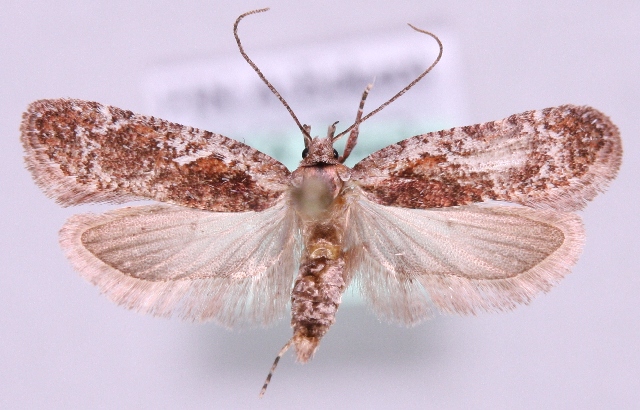
Other threatened species in Depressariidae


Threatened in Albania

Frequently asked questions
Why is Carrot Flat-body classified as Vulnerable?
Where does Carrot Flat-body live?
What are the main threats to Carrot Flat-body?
Get weekly conservation intelligence
One short digest a week of the most striking species and country data we ship, plus breaking conservation news paired with our database where it matters.
Free, no spam. One-click unsubscribe in every email.