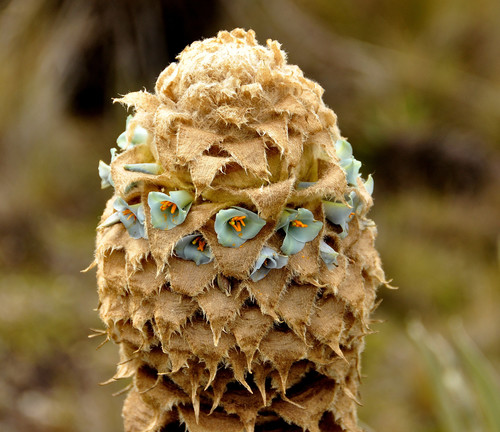
Puya trianae
Photo: iNaturalist: (c) Alejandro Lopez, some rights reserved (CC BY-NC-SA), uploaded by Alejandro Lopez
Overview
The Cardón (Puya trianae) is a spectacular bromeliad endemic to the Colombian Andes, forming massive rosettes that can reach 3-5 meters in height with silvery-green leaves and towering flower spikes up to 10 meters tall. This remarkable plant produces thousands of cream-colored flowers that provide crucial nectar resources for hummingbirds and other pollinators in high-altitude ecosystems. As a keystone species in páramo environments, it creates microhabitats and serves as a foundation species for other endemic flora and fauna.
Puya trianae faces significant threats from habitat destruction due to agricultural expansion and urban development in Colombia's high-altitude ecosystems. Climate change poses additional risks by altering the specific temperature and moisture conditions required for this endemic bromeliad's survival. The species' restricted range and specialized habitat requirements make it particularly vulnerable to environmental changes.
Habitat
Endemic to the high-altitude páramo and subpáramo ecosystems of the Colombian Andes, typically found between 2,800-4,200 meters elevation. Grows in open grasslands, rocky slopes, and montane scrublands with well-drained soils and high UV exposure.
Other threatened species in Bromeliaceae

Frequently asked questions
Why is Puya trianae classified as Vulnerable?
Where does Puya trianae live?
What are the main threats to Puya trianae?
Get weekly conservation intelligence
One short digest a week of the most striking species and country data we ship, plus breaking conservation news paired with our database where it matters.
Free, no spam. One-click unsubscribe in every email.