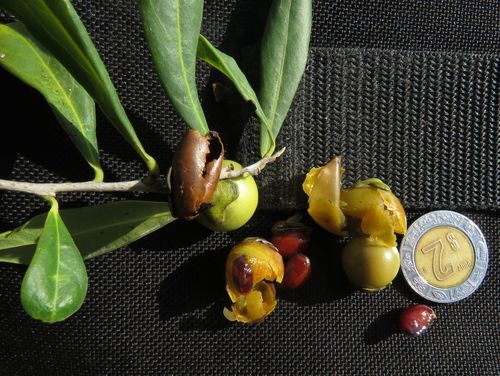
Diospyros tetrasperma
Photo: iNaturalist: (c) Alfredo Dorantes Euan, all rights reserved, uploaded by Alfredo Dorantes Euan
Overview
Diospyros tetrasperma, known as caqui-olho-de-boi, is a tropical tree species in the ebony family (Ebenaceae) characterized by its distinctive four-seeded fruits and leathery leaves. This medium-sized tree produces small, inconspicuous flowers and plays an important ecological role as a food source for frugivorous birds and mammals in its native forest ecosystems.
Diospyros tetrasperma faces severe population decline primarily due to extensive habitat loss from deforestation and agricultural expansion in its native Atlantic Forest range in Brazil. The species' extremely limited distribution and small population size make it highly vulnerable to local extinctions from human activities and environmental changes.
Habitat
This species occurs in lowland tropical rainforests and humid montane forests, typically growing in well-drained soils along forest edges and in secondary growth areas. It is adapted to the understory and mid-canopy layers of dense, biodiverse forest ecosystems with high humidity and consistent rainfall patterns.
Other threatened species in Ebenaceae

Frequently asked questions
Why is Diospyros tetrasperma classified as Critically Endangered?
Where does Diospyros tetrasperma live?
What are the main threats to Diospyros tetrasperma?
Get weekly conservation intelligence
One short digest a week of the most striking species and country data we ship, plus breaking conservation news paired with our database where it matters.
Free, no spam. One-click unsubscribe in every email.