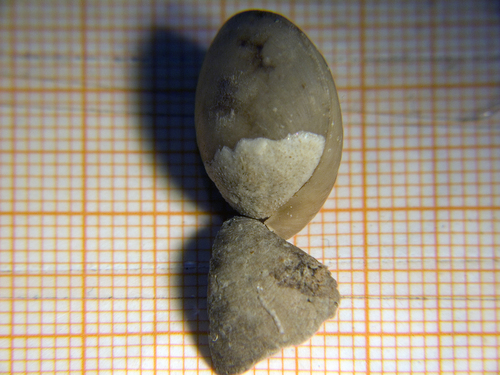
Macandrevia cranium
Photo: iNaturalist: (c) Amphibol, some rights reserved (CC BY-SA)
Overview
The bulldogskjell (Macandrevia cranium) is a distinctive deep-sea brachiopod characterized by its robust, skull-like shell with pronounced ridges and a broad, flattened profile reminiscent of a bulldog's face. This sessile filter-feeder plays a crucial role in benthic ecosystems by processing organic matter from the water column and providing hard substrate for other marine organisms to colonize.
The bulldogskjell (Macandrevia cranium) faces severe population decline primarily due to deep-sea trawling activities that destroy its fragile cold-water coral reef habitat. Climate change-induced ocean acidification and warming temperatures further threaten the species by degrading the calcium carbonate structures it depends on for survival. The species' extremely limited range and slow reproductive rate make recovery particularly challenging.
Habitat
Macandrevia cranium inhabits cold, deep continental shelf waters between 200-800 meters depth, typically anchoring to rocky outcrops and stable sediment areas with strong bottom currents. The species requires low-temperature environments with high dissolved oxygen levels and specific calcium carbonate saturation conditions found along northern Atlantic and Pacific continental margins.
Threatened in Antarctica



Frequently asked questions
Why is Macandrevia cranium classified as Critically Endangered?
Where does Macandrevia cranium live?
What are the main threats to Macandrevia cranium?
Get weekly conservation intelligence
One short digest a week of the most striking species and country data we ship, plus breaking conservation news paired with our database where it matters.
Free, no spam. One-click unsubscribe in every email.