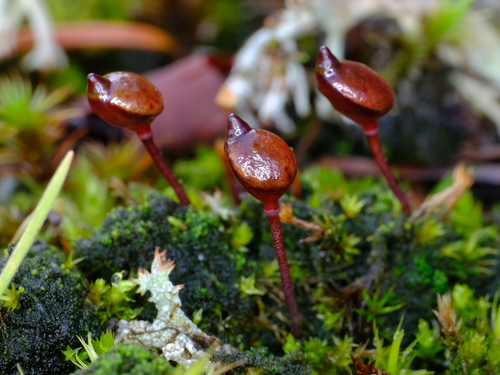
Brown Shield-moss
Buxbaumia aphylla
Photo: iNaturalist: (c) Brian Starzomski, some rights reserved (CC BY-NC), uploaded by Brian Starzomski
Overview
Bug-on-a-stick is a distinctive moss species characterized by its unusual asymmetrical capsules that sit atop thin, reddish-brown stalks, resembling tiny insects perched on sticks. This small but remarkable bryophyte plays an important ecological role in forest ecosystems by contributing to nutrient cycling and providing microhabitat for invertebrates. The species has a unique appearance with its flattened, oblique spore capsules that lack the symmetrical form typical of most mosses.
Bug-on-a-stick faces significant threats from habitat loss due to deforestation and forest fragmentation, which reduces the availability of suitable decaying wood substrates essential for its survival. Climate change and air pollution further compromise this moss species by altering forest conditions and reducing air quality in its specialized microhabitats.
Habitat
Inhabits mature coniferous and mixed forests, particularly growing on decaying logs, stumps, and rotting wood in shaded, humid forest floor environments. Requires specific microhabitat conditions with high moisture levels and partial decomposition of woody substrates.
Frequently asked questions
Why is Brown Shield-moss classified as Vulnerable?
Where does Brown Shield-moss live?
What are the main threats to Brown Shield-moss?
Get weekly conservation intelligence
One short digest a week of the most striking species and country data we ship, plus breaking conservation news paired with our database where it matters.
Free, no spam. One-click unsubscribe in every email.