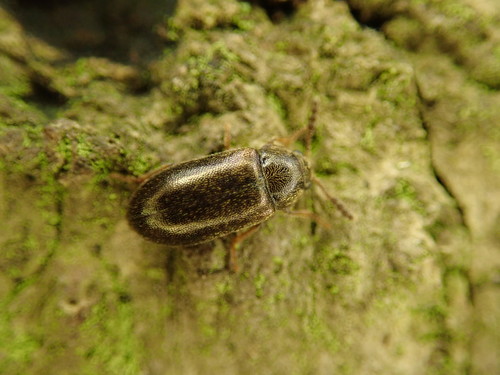
Tetratoma desmarestii
Photo: iNaturalist: (c) Kevin Gielen, some rights reserved (CC BY-NC), uploaded by Kevin Gielen
Overview
The brun lövsvampbagge (Tetratoma desmarestii) is a small, brown fungus beetle belonging to the family Tetratomidae. These beetles are specialized decomposers that feed on bracket fungi and other wood-inhabiting fungi, playing a crucial role in forest nutrient cycling by breaking down fungal matter.
Tetratoma desmarestii is critically endangered primarily due to the loss and degradation of old-growth deciduous forests, particularly those containing its host fungi on dead and decaying hardwood trees. The species requires very specific microhabitat conditions found only in mature forest ecosystems with sufficient dead wood and fungal diversity, which have become increasingly rare due to intensive forestry practices and habitat fragmentation.
Habitat
The species inhabits mature deciduous and mixed forests where it lives in association with bracket fungi growing on dead or dying hardwood trees, particularly beech, oak, and birch. It requires forests with substantial amounts of coarse woody debris and a continuous supply of fungal host species.
Frequently asked questions
Why is Tetratoma desmarestii classified as Critically Endangered?
Where does Tetratoma desmarestii live?
What are the main threats to Tetratoma desmarestii?
Get weekly conservation intelligence
One short digest a week of the most striking species and country data we ship, plus breaking conservation news paired with our database where it matters.
Free, no spam. One-click unsubscribe in every email.