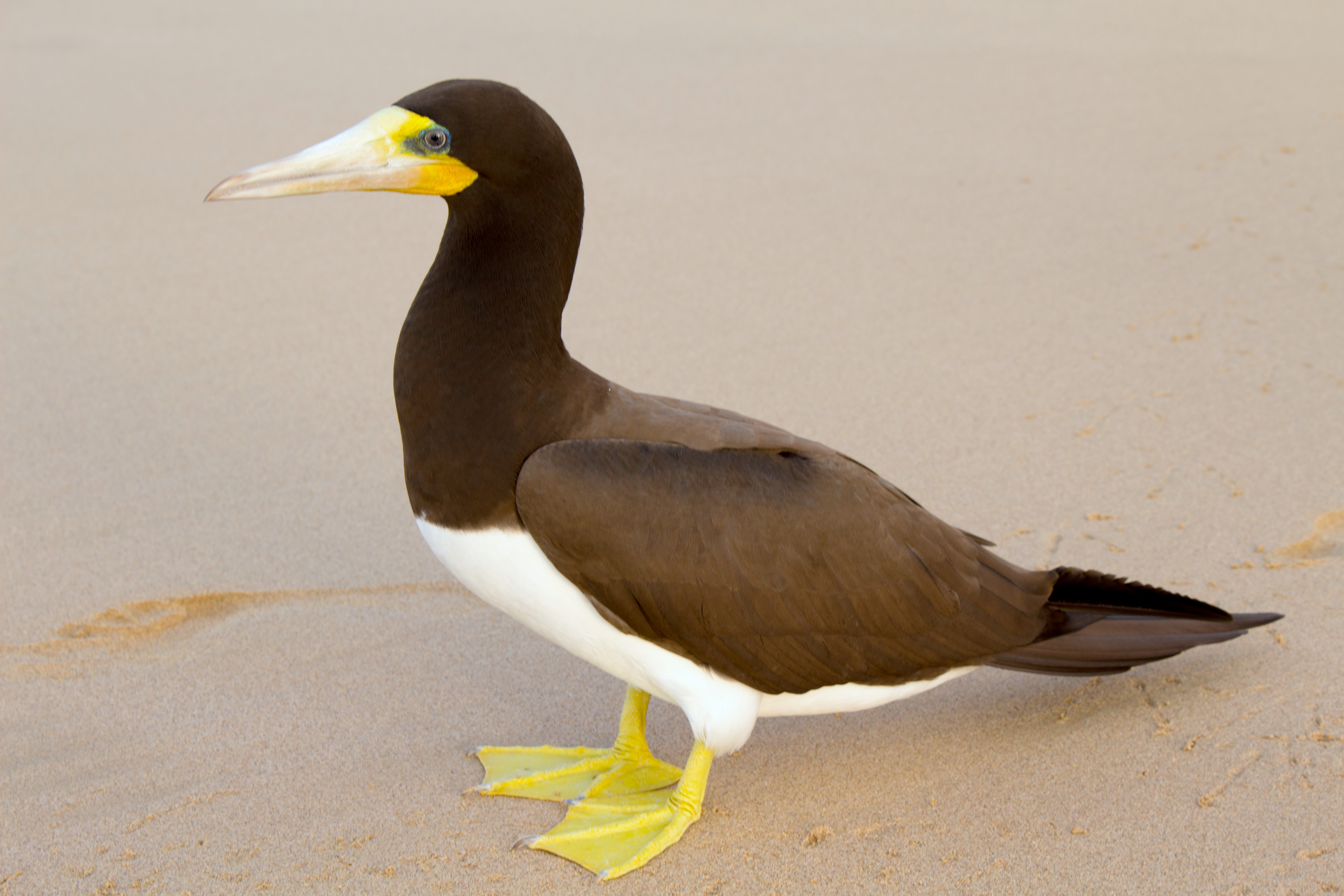
Brown Booby
Sula leucogaster
Photo: Wikimedia Commons (CC) via https://en.wikipedia.org/wiki/Brown_booby
Overview
The brown booby is a large seabird in the booby and gannet family Sulidae, of which it is one of the most common and widespread species. It has a pantropical range, which overlaps with that of other booby species. The gregarious brown booby commutes and forages at low height over inshore waters.
Flocks plunge-dive to take small fish, especially when these are driven near the surface by their predators. They nest only on the ground, and roost on solid objects rather than the water surface.
Brown Boobies face significant threats from habitat loss due to coastal development and human disturbance at nesting colonies. Climate change impacts, including sea level rise and altered ocean conditions affecting prey availability, pose additional challenges to breeding success and population stability.
Habitat
This species breeds on islands and coasts in the pantropical areas of the Atlantic, Indian and Pacific oceans. They frequent the breeding grounds of the islands in the Gulf of Mexico and the Caribbean Sea. With the rise in pollution in the world, brown boobies have been using marine debris to make their nests, with 90.1% of these nest were consisted of plastic, while nests near shipwreck have a...
Other threatened species in Sulidae

Frequently asked questions
Why is Brown Booby classified as Endangered?
Where does Brown Booby live?
What are the main threats to Brown Booby?
Get weekly conservation intelligence
One short digest a week of the most striking species and country data we ship, plus breaking conservation news paired with our database where it matters.
Free, no spam. One-click unsubscribe in every email.