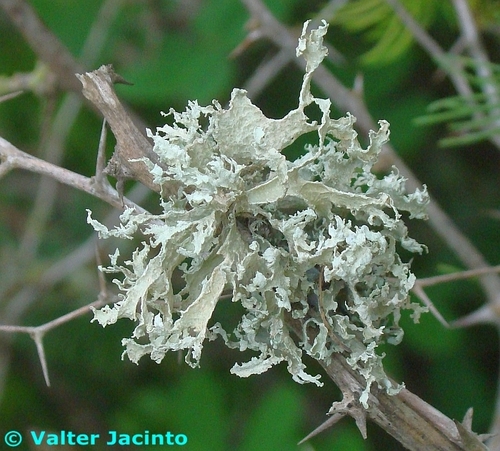
Inelegant Strap Lichen
Ramalina canariensis
Photo: iNaturalist: (c) Valter Jacinto | Portugal, some rights reserved (CC BY-NC-SA)
Overview
Ramalina canariensis is a fruticose lichen species endemic to the Canary Islands, characterized by its pale greenish-gray, strap-like branching thalli that can reach several centimeters in length. This epiphytic lichen plays a crucial ecological role in nutrient cycling and provides microhabitat for invertebrates while serving as an indicator species for air quality in its native ecosystems.
Ramalina canariensis, a lichen species endemic to the Canary Islands, faces severe threats from habitat destruction due to urban development and tourism infrastructure expansion. Air pollution and climate change are additionally impacting this sensitive species, which requires specific environmental conditions to survive.
Habitat
This lichen grows exclusively on the bark of native trees and shrubs in the laurel forests (laurisilva) and pine forests of the Canary Islands, typically at elevations between 400-1,200 meters where persistent fog and high humidity create optimal conditions. It shows particular affinity for the bark of Laurus species, Persea indica, and Pinus canariensis in areas with minimal human disturbance.
Other threatened species in Ramalinaceae
Frequently asked questions
Why is Inelegant Strap Lichen classified as Critically Endangered?
Where does Inelegant Strap Lichen live?
What are the main threats to Inelegant Strap Lichen?
Get weekly conservation intelligence
One short digest a week of the most striking species and country data we ship, plus breaking conservation news paired with our database where it matters.
Free, no spam. One-click unsubscribe in every email.