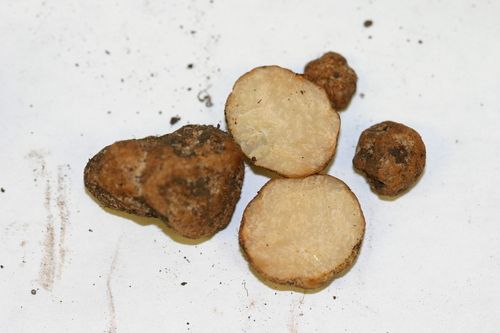
Brain Fold Truffle
Hydnobolites cerebriformis
Photo: iNaturalist: (c) Jonathan Frank, some rights reserved (CC BY-NC-ND), uploaded by Jonathan Frank
Overview
The Brain-Like Hydnobolites is a distinctive fungal species characterized by its convoluted, brain-like fruiting body with deep folds and ridges that give it its cerebriform appearance. This saprophytic fungus plays a crucial ecological role in forest ecosystems by decomposing organic matter and forming mycorrhizal associations with tree roots, facilitating nutrient exchange and supporting forest health.
Brain-Like Hydnobolites faces significant threats from habitat degradation due to deforestation and forest fragmentation, which disrupts the specific microhabitat conditions required for this fungal species. Climate change poses additional risks by altering temperature and moisture regimes essential for its growth and reproduction. Pollution and changes in forest composition from invasive species further compromise the delicate ecological balance this species depends upon.
Habitat
This fungal species inhabits mature deciduous and mixed forests, typically growing on decaying hardwood logs and stumps in moist, shaded understory environments. It requires specific microhabitat conditions including stable moisture levels, particular soil chemistry, and the presence of suitable decomposing organic matter.
Other threatened species in Pezizaceae

Frequently asked questions
Why is Brain Fold Truffle classified as Vulnerable?
Where does Brain Fold Truffle live?
What are the main threats to Brain Fold Truffle?
Get weekly conservation intelligence
One short digest a week of the most striking species and country data we ship, plus breaking conservation news paired with our database where it matters.
Free, no spam. One-click unsubscribe in every email.