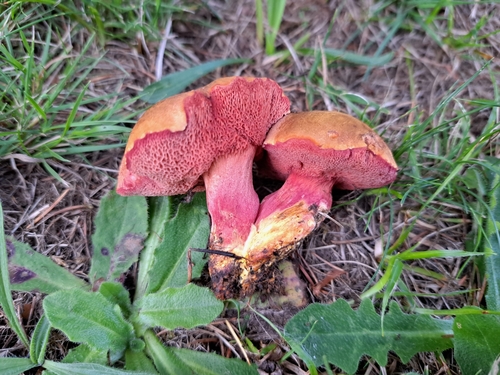
Crimson Bolete
Chalciporus rubinus
Photo: iNaturalist: (c) ionafraser, some rights reserved (CC BY)
Overview
Bolet rubis (Chalciporus rubinus) is a distinctive bolete mushroom characterized by its reddish-brown cap and bright yellow pores that bruise blue when touched. This mycorrhizal fungus forms essential symbiotic relationships with coniferous trees, particularly spruces and firs, facilitating nutrient exchange and supporting forest ecosystem health.
Bolet rubis faces significant threats from habitat degradation and loss of its specialized mycorrhizal forest ecosystems. Climate change and forest fragmentation are disrupting the delicate soil chemistry and host tree relationships essential for this fungal species' survival and reproduction.
Habitat
Deciduous and mixed forests, particularly beech and oak woodlands with acidic soils, forming mycorrhizal associations with broadleaf trees. Typically found in mature forest ecosystems with stable soil conditions and established fungal networks.
Other threatened species in Boletaceae



Frequently asked questions
Why is Crimson Bolete classified as Vulnerable?
Where does Crimson Bolete live?
What are the main threats to Crimson Bolete?
Get weekly conservation intelligence
One short digest a week of the most striking species and country data we ship, plus breaking conservation news paired with our database where it matters.
Free, no spam. One-click unsubscribe in every email.