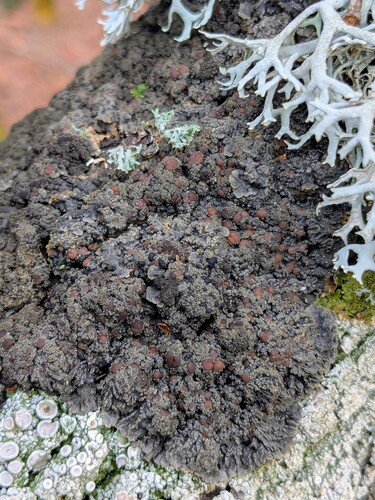
Toninia plumbina
Photo: Photo: (c) Juan Carlos Zamora, some rights reserved (CC BY-NC), uploaded by Juan Carlos Zamora
Overview
Toninia plumbina is a small crustose lichen species characterized by its distinctive lead-gray to bluish-gray thallus that forms thin, closely adherent patches on rock surfaces. This cryptogamic species plays a crucial role in primary succession and soil formation processes, contributing to nutrient cycling in harsh environments where few other organisms can establish.
Toninia plumbina is a critically endangered lichen species facing severe population declines due to habitat loss and environmental degradation. Air pollution and climate change are significantly impacting the specialized microhabitats this species requires for survival.
Habitat
Toninia plumbina occurs exclusively on calcareous rock outcrops and limestone cliffs in montane regions, typically at elevations between 800-2000 meters. The species requires specific microclimatic conditions with high humidity, minimal direct sunlight, and stable temperature regimes found in sheltered rock crevices and north-facing cliff faces.
Other threatened species in Ramalinaceae
Frequently asked questions
Why is Toninia plumbina classified as Critically Endangered?
Where does Toninia plumbina live?
What are the main threats to Toninia plumbina?
Get weekly conservation intelligence
One short digest a week of the most striking species and country data we ship, plus breaking conservation news paired with our database where it matters.
Free, no spam. One-click unsubscribe in every email.