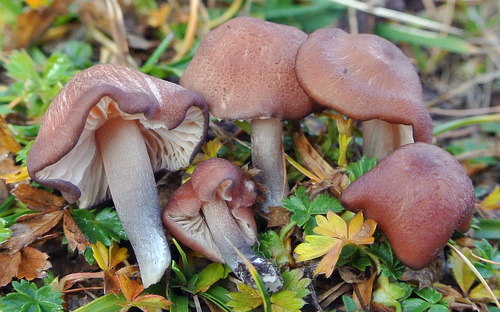
Bluefoot Pinkgill
Entoloma catalaunicum
Photo: iNaturalist: (c) Nicolò Oppicelli, some rights reserved (CC BY-NC), uploaded by Nicolò Oppicelli
Overview
The Bluefoot Pinkgill (Entoloma catalaunicum) is a distinctive mushroom species characterized by its pale blue stem base and salmon-pink gills that darken with age. This saprotrophic fungus plays a crucial role in forest ecosystems by decomposing organic matter and forming mycorrhizal associations with specific tree species, contributing to nutrient cycling and soil health.
Bluefoot Pinkgill faces significant threats from habitat degradation and loss of suitable forest ecosystems where it occurs. Climate change and human disturbance to its specialized habitat requirements contribute to population decline and fragmentation.
Habitat
This fungal species occurs in Mediterranean oak and mixed deciduous forests, typically associated with calcareous soils and specific tree species in woodland environments. It has a restricted distribution primarily in Mediterranean forest ecosystems with particular soil chemistry requirements.
Other threatened species in Entolomataceae

Frequently asked questions
Why is Bluefoot Pinkgill classified as Vulnerable?
Where does Bluefoot Pinkgill live?
What are the main threats to Bluefoot Pinkgill?
Get weekly conservation intelligence
One short digest a week of the most striking species and country data we ship, plus breaking conservation news paired with our database where it matters.
Free, no spam. One-click unsubscribe in every email.