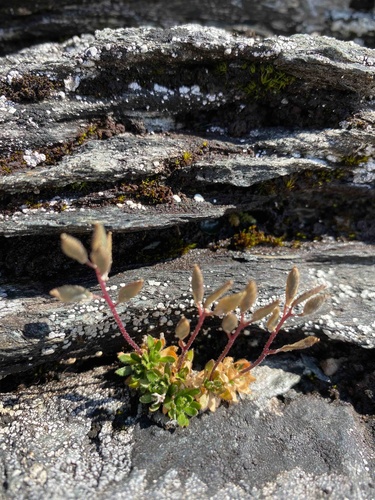
Draba cacuminum
Photo: iNaturalist: (c) Bjørn Moe, some rights reserved (CC BY-NC), uploaded by Bjørn Moe
Overview
Draba cacuminum is a species of flowering plant belonging to the family Brassicaceae.
Blockhavsdraba faces significant threats from climate change, as warming temperatures and changing precipitation patterns alter its specialized high-altitude Arctic habitat. The species' extremely limited distribution and small population size make it particularly vulnerable to habitat degradation and stochastic events that could impact its long-term survival.
Habitat
High-altitude Arctic and subarctic rocky slopes, scree fields, and exposed mountain summits, typically found on calcareous substrates in extremely cold and windy conditions. The species occupies specialized microhabitats in crevices and among loose rocks where snow accumulation is minimal.
Other threatened species in Brassicaceae


Frequently asked questions
Why is Draba cacuminum classified as Vulnerable?
Where does Draba cacuminum live?
What are the main threats to Draba cacuminum?
Get weekly conservation intelligence
One short digest a week of the most striking species and country data we ship, plus breaking conservation news paired with our database where it matters.
Free, no spam. One-click unsubscribe in every email.